
How Long Does the Bariatric Surgery Process Take? (From First Consultation to Recovery)
For many patients considering bariatric surgery, one of the most common questions is: “How long does the whole process take?”
The answer depends on several factors, including medical evaluation, preparation, and recovery. However, understanding the general timeline can help patients plan their journey with more confidence.
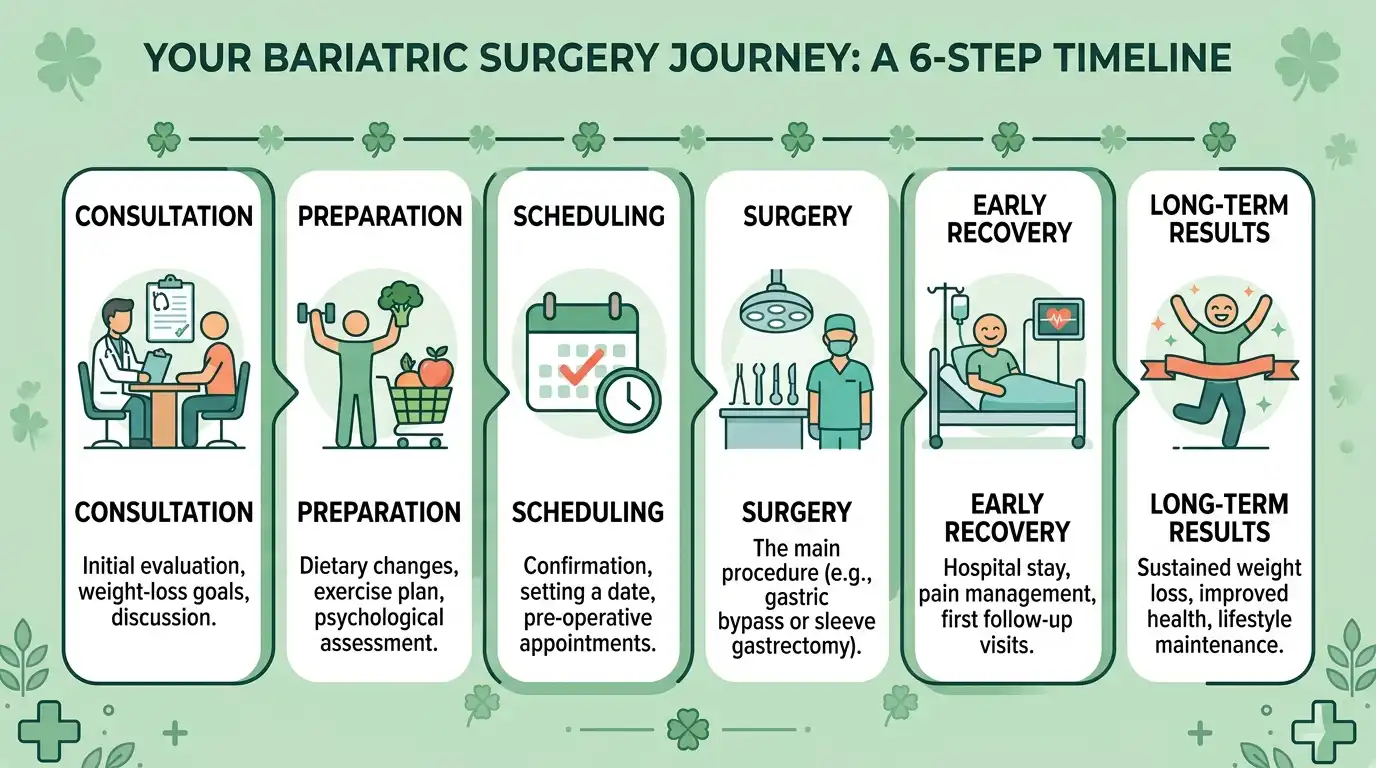
Step 1: Initial Consultation and Medical Evaluation
The process begins with a detailed medical assessment. This step is essential to determine whether bariatric surgery is the right option for each patient.
During this phase, doctors evaluate:
- Medical history
- Current health conditions
- Body mass index (BMI)
- Blood tests and imaging results
This stage may take a few days to a couple of weeks, depending on how quickly tests are completed. The goal is not speed, but safety and personalized treatment planning.

Step 2: Preoperative Preparation
Once the patient is approved for surgery, preparation begins.
This stage may include:
- Nutritional guidance
- Lifestyle adjustments
- Preoperative diet
- Additional medical tests if needed
Preparation is important to reduce surgical risks and improve recovery outcomes. Depending on the patient’s condition, this stage may last 1–2 weeks.

Step 3: Surgery Scheduling and Travel Planning
In many countries, patients may wait months for surgery. However, in Türkiye, the timeline is often shorter.
After completing the evaluation, surgery can usually be scheduled within days to a few weeks.
For international patients, this phase also includes:
- Travel arrangements
- Accommodation planning
- Coordination with the medical team
Step 4: The Surgery and Hospital Stay
Bariatric surgery is typically performed using minimally invasive laparoscopic techniques. The procedure itself usually takes 1–3 hours.
Most patients stay in the hospital for 2 to 4 days, depending on their recovery and overall condition. During this time, doctors monitor recovery, manage pain, and ensure there are no complications.
Step 5: Early Recovery (First 2–4 Weeks)
The first few weeks after surgery are focused on healing and adaptation. Patients follow a structured plan that includes:
- Gradual dietary progression (liquids to soft foods)
- Limited physical activity at the beginning
- Regular medical follow-up
Most patients can return to light daily activities within 1–2 weeks, depending on their recovery.
Step 6: Long-Term Recovery and Results
Full recovery and weight loss continue over several months.
During this phase:
- Weight loss becomes more noticeable
- Eating habits gradually stabilize
- Patients adapt to a new lifestyle
Long-term success depends on:
- Consistency
- Follow-up care
- Lifestyle changes
Bariatric surgery is not a short-term solution, it is part of a long-term health journey.
How the Timeline Differs for International Patients
One of the main reasons patients choose Turkey is faster access to treatment. While patients in some countries may wait months or years, international patients can often complete the entire process, from evaluation to surgery, within a much shorter timeframe.
However, the focus remains on structured, safe, and well-planned care, not just speed.

Why Proper Planning Matters
Understanding the timeline helps patients:
- Set realistic expectations
- Prepare physically and mentally
- Plan travel and recovery
- Reduce stress and uncertainty
Each patient’s journey is unique, and timelines may vary depending on individual health conditions.
Personalized Bariatric Surgery Journey with BB Global Health
At BB Global Health, we support patients at every stage of the process, including:
- Initial evaluation and consultation
- Coordination with experienced surgeons
- Travel and logistics planning
- Postoperative follow-up and support
Our goal is to provide a safe, structured, and patient-centered experience from the first contact to long-term recovery.