
When Should Men Start Getting Prostate Screenings? A Guide by Age & Risk
Prostate cancer is one of the most common cancers among men, but when detected early, it is also one of the most treatable.
Knowing when to start screening can make a significant difference in outcomes. Unfortunately, many men delay or avoid screenings because they are unsure about timing, risk factors, or what the tests involve.
This guide breaks down everything men need to know about when to begin prostate screenings, based on age, family history, and individual risk.
Why Prostate Screening Matters
The prostate is a small gland located below the bladder, and prostate cancer often develops silently. Many men experience no symptoms in the early stages, making screening essential for early detection.
Screenings help identify:
-
Early cancer before symptoms appear
-
Abnormal prostate changes
-
Elevated PSA levels
-
Tumors that may require treatment or monitoring
Early detection leads to more treatment options, less invasive interventions, and significantly better long-term outcomes.
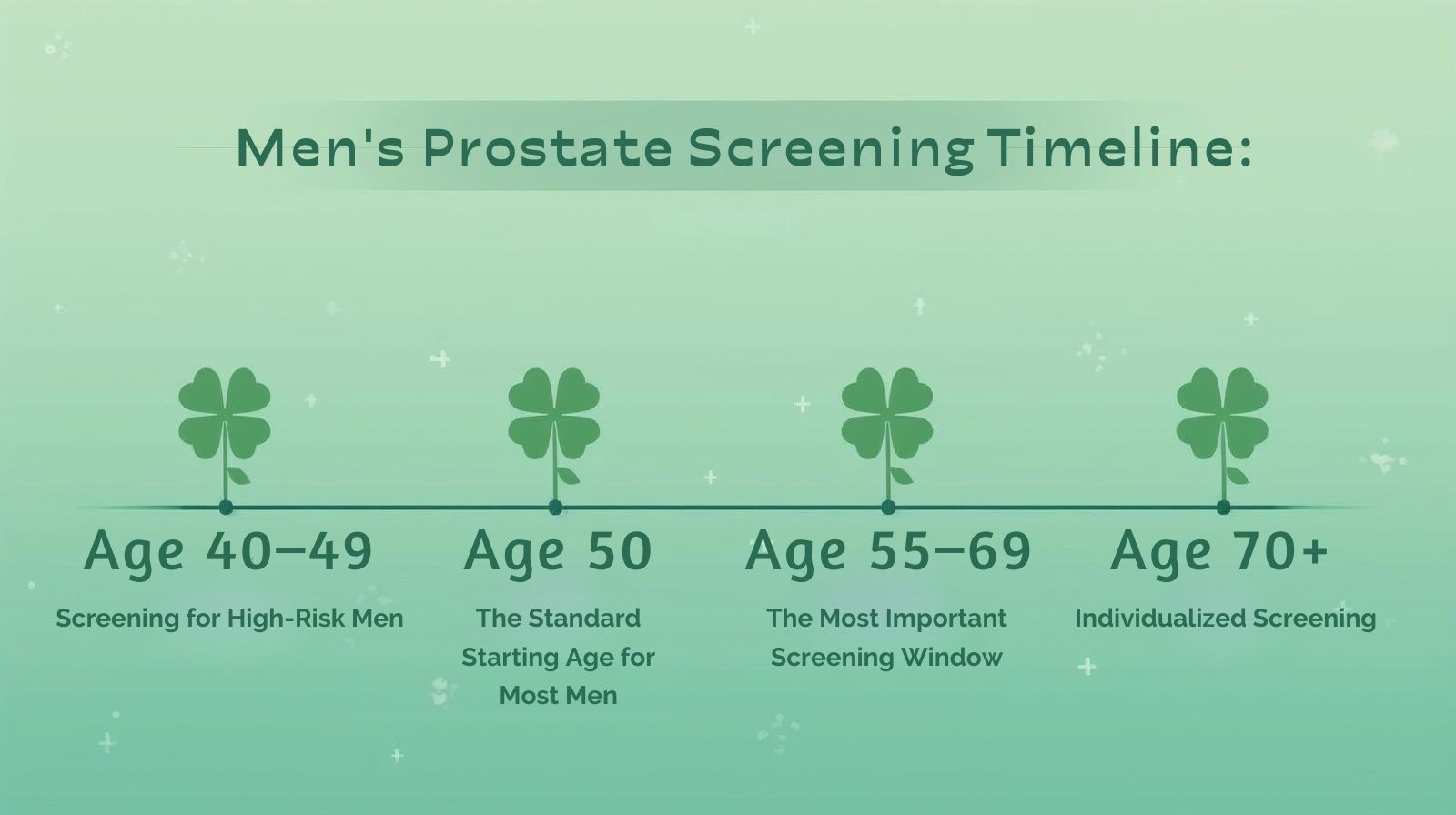
Age 40–49: Screening for High-Risk Men
Not all men need screening in their 40s, but high-risk groups should begin early monitoring. You may be considered high-risk if you:
-
Have a first-degree relative with prostate cancer (father, brother, or son)
-
Have multiple relatives diagnosed at a young age
-
Are of African descent
-
Have a history of certain genetic mutations (BRCA1/BRCA2)
Recommended screening:
-
A baseline PSA test between ages 40–45
-
Follow-up intervals determined by results and risk profile
For men in high-risk groups, early screening can catch aggressive cancers sooner.
Age 50: The Standard Starting Age for Most Men
For men with average risk, most international guidelines recommend beginning prostate cancer screening at age 50.
At this age, screening typically includes:
-
PSA (Prostate-Specific Antigen) blood test
-
Digital rectal exam (DRE) when recommended by the physician
PSA testing is simple, fast, and highly effective as a first-line screening tool.
Age 55–69: The Most Important Screening Window
This age range is considered the critical window for prostate cancer detection. Most prostate cancers are diagnosed between ages 60 and 70, making these years essential for regular screening.
Recommended:
-
PSA test every 1–2 years
-
Follow-up imaging or biopsy if PSA levels rise or if abnormalities are found
Shared decision-making between patients and doctors is crucial to determine the optimal screening schedule.
Age 70+: Individualized Screening
For men over 70, screening becomes more personalized. Some men remain healthy, active, and have long life expectancy, and may still benefit from continued monitoring. Others may discontinue screening if risks outweigh benefits.
Your doctor may recommend continuing screening if:
-
You are in good health
-
You have a history of elevated PSA
-
You belong to a higher-risk group
The decision should always be made with your medical team based on your individual health status.
Understanding Your Risk: What Really Matters

Several factors influence a man’s risk of developing prostate cancer:
Family History
Men with a family history of prostate cancer have a significantly higher risk.
Ethnicity
Men of African descent have a higher incidence of aggressive prostate cancer.
Genetics
Certain inherited mutations can increase risk, BRCA1, BRCA2, and others.
Lifestyle Factors
Obesity, poor diet, and smoking can influence overall prostate health.
Knowing your risk helps determine when and how often you should be screened.

Prostate Cancer Symptoms Men Should Never Ignore
While early prostate cancer is often silent, the following symptoms require immediate medical evaluation:
-
Frequent urination
-
Difficulty starting or stopping urine flow
-
Blood in urine or semen
-
Pelvic discomfort
-
Lower back pain
These symptoms don’t always indicate cancer, but they should never be overlooked.
How BB Global Health Supports Men’s Prostate Health
At BB Global Health, we provide comprehensive, personalized care for international patients. Our prostate cancer screening and diagnostic services include:
-
PSA testing
-
Urologic evaluation and consultation
-
Prostate MRI
-
Biopsy when necessary
-
Genetic risk assessment
-
Complete care coordination for international patients
Our team guides you through every stage, from screening to diagnosis and treatment options, in Turkey’s internationally accredited hospitals.

Take Charge of Your Health Today
The right time to start screening depends on your age, risk factors, and family history, but early evaluation is always an advantage. If you’re unsure when to begin, consult with a specialist and make an informed decision.
To schedule your prostate screening or consultation, contact BB Global Health:
+90 530 479 59 44