
Thoracic Surgical Conditions
Lung cancer surgery - primary curative treatment for early-stage NSCLC: Surgical resection remains the cornerstone treatment for resectable non-small cell lung cancer (NSCLC). The TNM staging system determines resectability:
- Stage I and II NSCLC: surgical resection (lobectomy is standard of care)
- Stage IIIA: selected cases - neoadjuvant treatment followed by surgery in multidisciplinary discussion
- Small cell lung cancer: very rarely surgical; predominantly chemotherapy/radiotherapy
Types of lung resection:
- Lobectomy: Removal of one of the five lung lobes - gold standard for lung cancer; VATS lobectomy is the preferred approach
- Segmentectomy: Anatomical resection of a lung segment - for patients with limited lung reserve where lobectomy would cause significant impairment
- Wedge resection: Non-anatomical removal of a peripheral nodule - lower morbidity; used for diagnosis or limited-disease palliation; higher local recurrence rate than lobectomy
- Pneumonectomy: Entire lung removal - for central tumours with no other option; high morbidity
Pulmonary nodule resection: Indeterminate pulmonary nodules (detected on CT) that cannot be conclusively diagnosed by bronchoscopy or CT-guided biopsy may be resected for simultaneous diagnosis and treatment. VATS wedge resection send frozen section - if malignant, proceed to oncological lobectomy in the same operative sitting.
Pleural disease:
- Pleural effusion: Video-assisted pleuroscopy - drain fluid, biopsies, talc pleurodesis if malignant
- Empyema (infected pleural collection): VATS decortication - removes the fibrous peel and drains infected material
- Pneumothorax: VATS wedge resection of bullae + pleurodesis (or pleurectomy) for recurrent pneumothorax
Mediastinal tumours:
- Thymoma (anterior mediastinum): Thymectomy is the standard treatment - VATS or robotic; also indicated in myasthenia gravis
- Mediastinal cysts (pericardial, bronchogenic)
- Posterior mediastinal neurogenic tumours
Oesophageal surgery: Oesophageal cancer resection (Ivor-Lewis or McKeown oesophagectomy) is one of the most complex thoracic procedures; performed by specialist oesophago-gastric surgeons - available at select partner centres
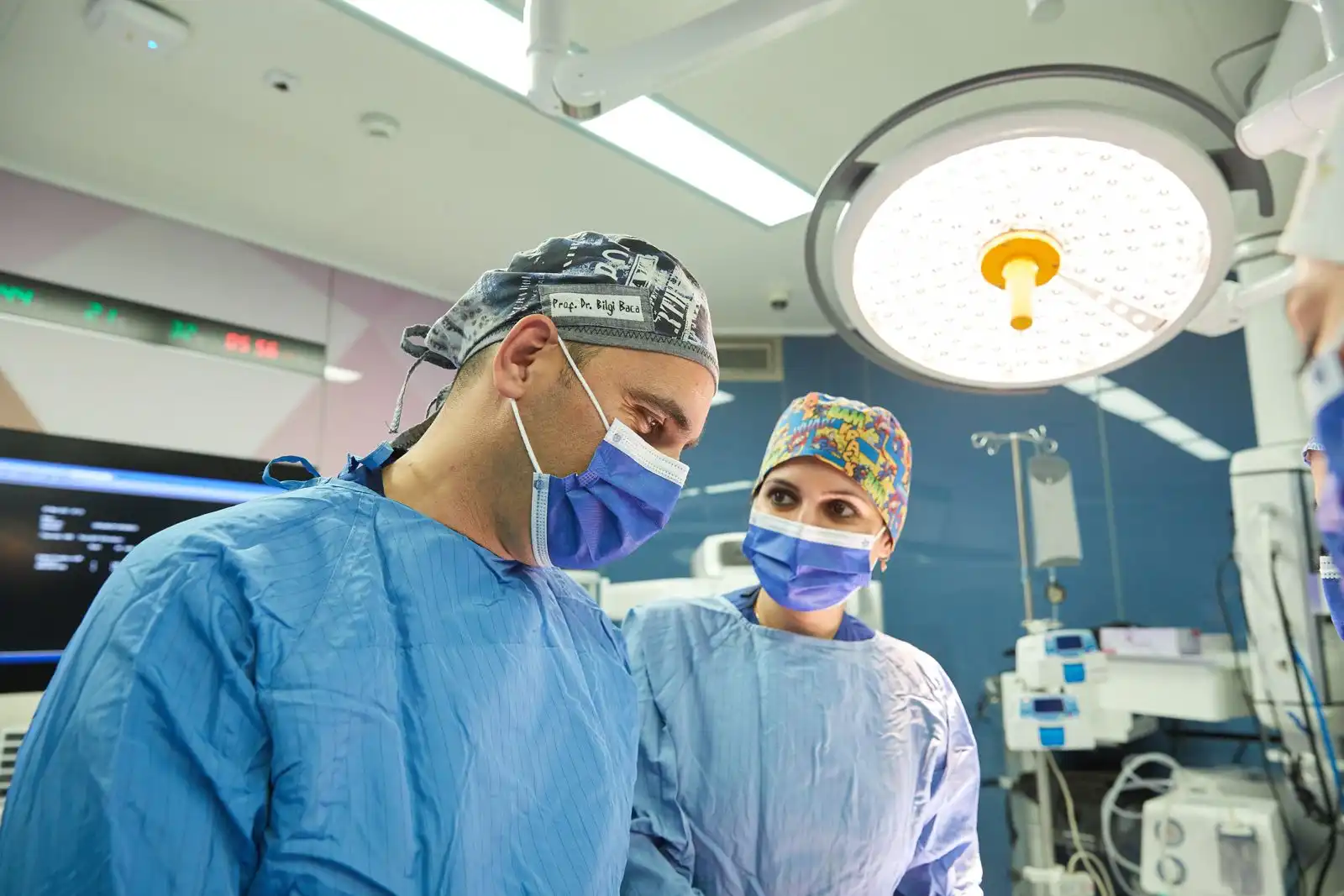
VATS vs. Open Thoracic Surgery
Video-Assisted Thoracoscopic Surgery (VATS) - standard for most thoracic procedures:
VATS uses 2-4 small incisions (1-3 cm) through which a thoracoscope (camera) and instruments are inserted. The lung collapses on the operative side (one-lung ventilation) allowing work inside the pleural cavity without opening the chest wall.
Advantages:
- Less post-operative pain (no rib spreading)
- Significantly shorter hospital stay (3-4 days vs. 7-10 days open)
- Faster return to normal activity (2-3 weeks vs. 4-6 weeks)
- Lower complication rate (pneumonia, atrial fibrillation, wound infection)
- Superior cancer outcomes equivalent to open surgery
VATS lobectomy is now recommended by most thoracic surgical societies as the standard approach for suitable lung resections.
Uniportal VATS: Single 2-4 cm incision - all instruments and camera through one port. Pioneered by leading thoracic surgeons; even less pain and faster recovery. Available at specialist centres.
Robotic-Assisted Thoracic Surgery (RATS): da Vinci robot-assisted lobectomy - enhanced 3D visualisation and wristed instrument freedom. Particularly useful for difficult hilar dissections. Available at select partner hospitals.
Open thoracotomy (posterolateral):
- 15-20 cm incision between the ribs; rib retraction required
- Reserved for: central complex tumours, completion pneumonectomies, thoracoabdominal approaches, or when VATS is converted due to adhesions/bleeding
- Higher morbidity; 7-10 day hospital stay
Anaesthesia and post-operative monitoring:
- One-lung ventilation during surgery (double-lumen endotracheal tube or bronchial blocker)
- Epidural catheter or paravertebral block for pain control - reduces opioid requirements
- Chest drain in situ until air leak resolved and drainage minimal
- Respiratory physiotherapy from day 1: breathing exercises, incentive spirometry
Pre-Operative Assessment and Recovery
Pre-operative pulmonary function assessment: All thoracic surgery candidates undergo:
- Spirometry (FEV1, FVC, DLCO): predicted post-operative FEV1 and DLCO >40% predicted are general minimum thresholds for lobectomy
- High-resolution CT chest (or PET-CT for lung cancer staging)
- Fibreoptic bronchoscopy for central lesions, and endobronchial staging (EBUS) for mediastinal node sampling
- CT-PET is standard for lung cancer staging: detects mediastinal nodal disease and distant metastasis
Lung cancer staging (pre-operative):
- PET-CT for nodal and distant staging
- EBUS (Endobronchial Ultrasound) or mediastinoscopy for mediastinal node biopsy if PET positive
- Brain MRI for Stage II and above
- Cardiorespiratory assessment for operability
Hospital course (VATS lobectomy):
- Day 0: Recovery from anaesthesia; chest drain on drainage; epidural/block for pain
- Day 1-2: Mobilise; breathing physiotherapy; drain assessed for air leak
- Day 3-5: Drain removed when output minimal and no air leak; discharge planning
- Day 4-5: Discharge to hotel
Recovery at hotel and beyond:
- Hotel recovery: 7-10 days in Turkey after discharge
- Activity: walking from day 1; avoid heavy lifting >5 kg for 4 weeks
- Return to driving: 2-3 weeks
- Return to desk work: 3-4 weeks after VATS lobectomy
Pathology and oncology:
- Definitive histology results typically 5-7 days post-resection
- Pathological staging guides any recommendation for adjuvant chemotherapy
- BB Global Health coordinates communication with the patient’s home oncologist for adjuvant treatment planning
Cost overview: VATS lobectomy all-inclusive Turkey: -10,000-17,000; UK private: -20,000-35,000. Pneumonectomy: -14,000-22,000 Turkey; full oncological workup and tumour board included.