
Types of Hernia
A hernia occurs when an organ or tissue pushes through a weakness or defect in the surrounding muscle or connective tissue wall. Most hernias are abdominal - asymptomatic small hernias may be watched, but symptomatic or enlarging hernias require surgical repair to prevent incarceration (trapped hernia - urgent) or strangulation (bowel blood supply cut off - emergency).
Inguinal hernia (most common, 75% of all hernias):
- Direct inguinal hernia: Abdominal contents push directly through weakened posterior inguinal canal wall (Hesselbach’s triangle defect)
- Indirect inguinal hernia: Follows the spermatic cord through the internal inguinal ring - more common in men
- Bilateral inguinal: Both sides - laparoscopic repair is particularly advantageous (single anaesthetic, both sides repaired via same ports)
- Symptoms: groin bulge (larger on coughing/straining), aching discomfort, reducible when lying down
- Irreducible or tender hernia: urgent assessment - risk of incarceration
Femoral hernia: Below and medial to inguinal ligament - higher strangulation risk; more common in women. Requires urgent repair once diagnosed.
Umbilical hernia: Through the umbilical scar - common in adults (especially with obesity, ascites, previous pregnancy). Small (<1 cm) asymptomatic: can observe; symptomatic or >1 cm: surgical repair.
Epigastric hernia: Through the linea alba between xiphoid and umbilicus - fat or omentum herniates; rarely contains bowel.
Incisional hernia: Through a previous abdominal surgical scar - risk factors: obesity, SSI, premature suture removal. Incidence 10-20% after midline laparotomy. Small incisional hernias: laparoscopic mesh; large complex incisional (>10 cm): component separation +/- biologic mesh.
Parastomal hernia: At site of colostomy/ileostomy - common complication; laparoscopic Sugarbaker technique or keyhole-assisted repair with mesh.
Surgical Techniques
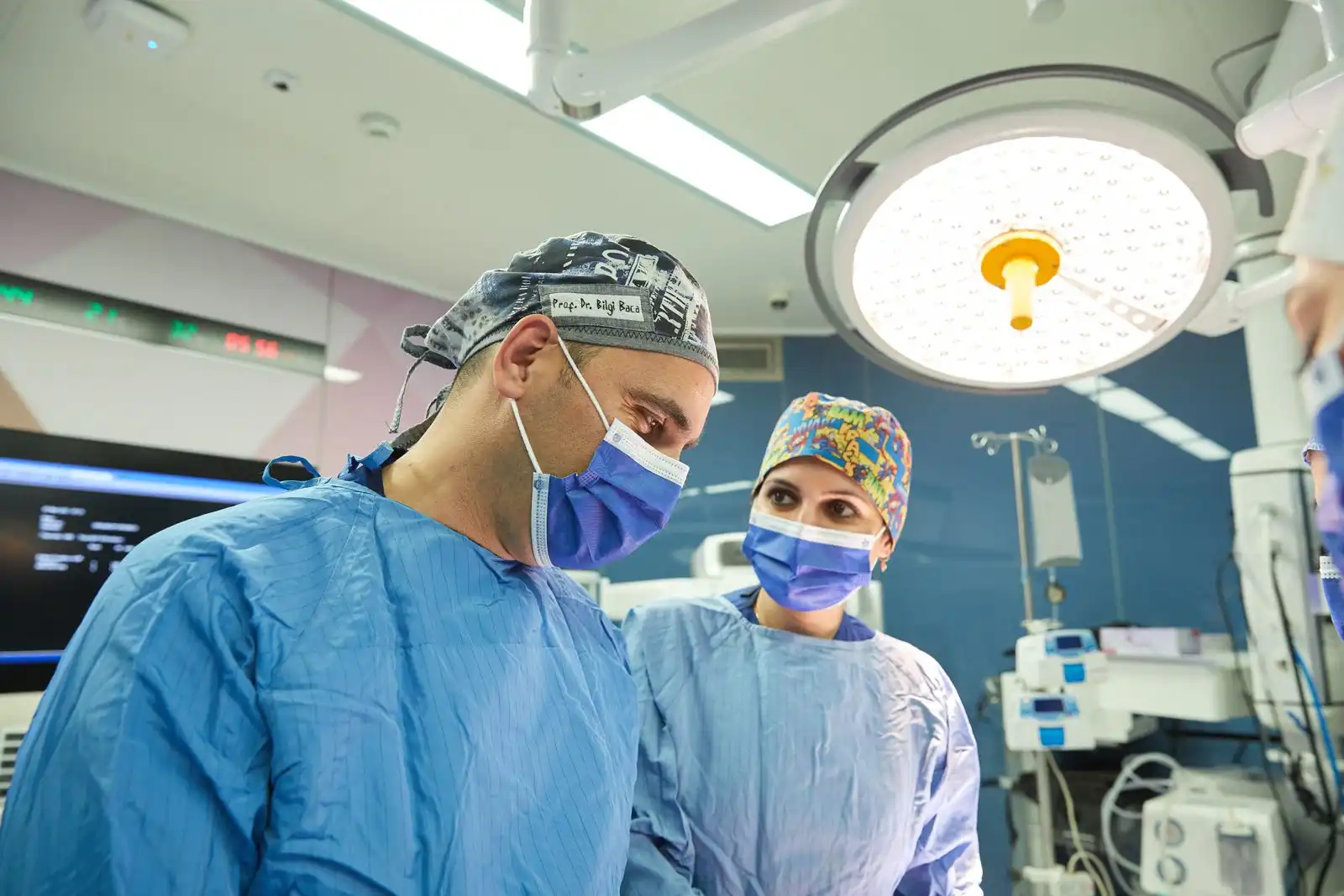
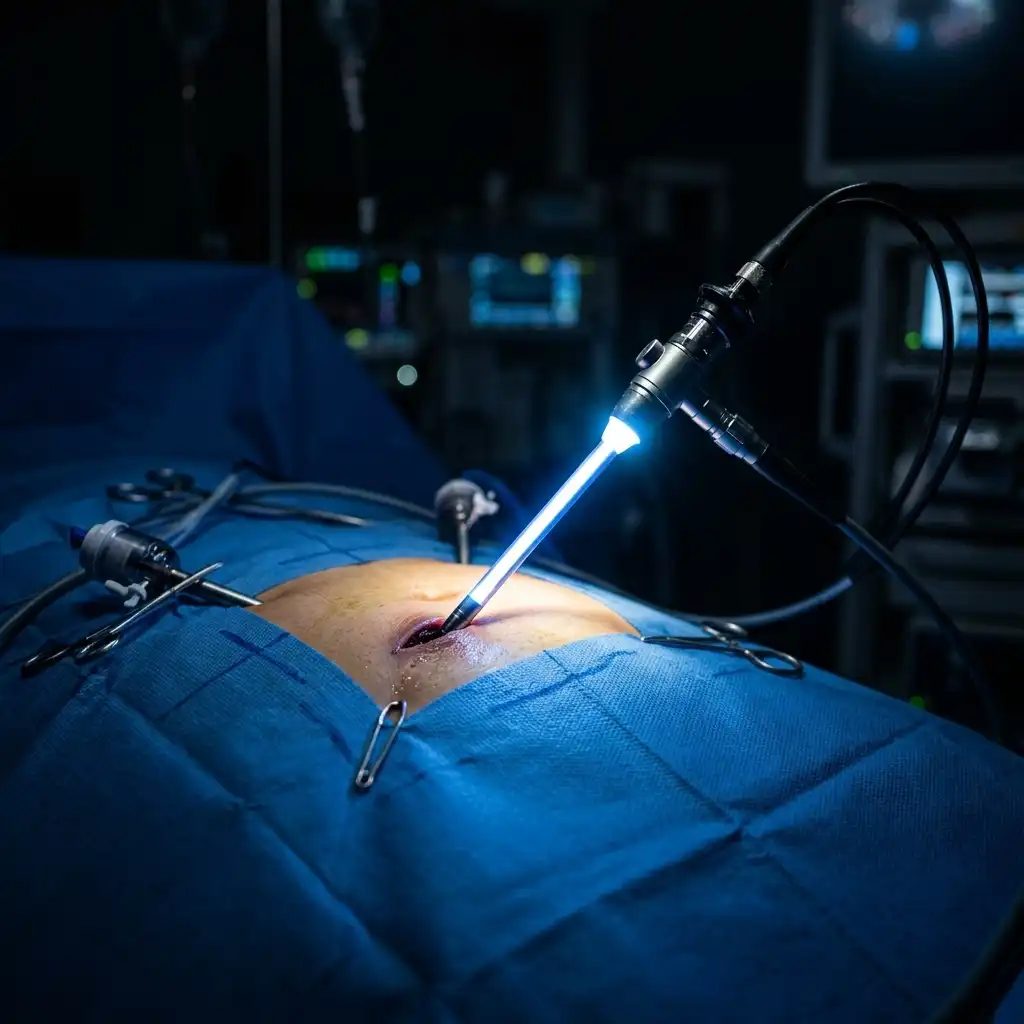
Laparoscopic TEP (Totally Extraperitoneal Repair) - preferred for inguinal hernia: The pre-peritoneal space is developed with a balloon dissector beneath the posterior rectus sheath without entering the peritoneal cavity. Three 5-12mm ports. Hernial sac reduced; large lightweight mesh (15-10 cm minimum) placed over the myopectineal orifice (covers direct, indirect, and femoral spaces). Fixed with fibrin glue or tackers.
Advantages of TEP: No entry to peritoneal cavity (less ileus, no risk of inadvertent bowel injury in peritoneum); faster recovery; bilateral repair through same ports; lower risk of port-site hernia. Disadvantages: More technically demanding; limited space in re-do inguinal surgery; learning curve.
Laparoscopic TAPP (Transabdominal Pre-Peritoneal): Enters the peritoneum first (3 ports); pre-peritoneal flap raised; mesh placed; peritoneum closed with running suture or tacker. Larger working space - preferred for re-do inguinal surgery, pelvic anatomy variation, or large direct hernias.
Open mesh repair (Lichtenstein technique): Gold standard for open inguinal repair. Plug-and-patch or flat mesh sutured over the posterior inguinal wall under local/regional/general anaesthesia. Day case; higher incidence of chronic groin pain (5-10%) vs. laparoscopic repair (1-3%).
Laparoscopic IPOM/TAPP for umbilical/incisional hernia: Intraperitoneal onlay mesh (IPOM-Plus): mesh placed intraperitoneally; defect closed + mesh sutured over. For incisional hernias: defect closure critical to prevent seroma and bulge.
Component separation (for large incisional hernia): Anterior component separation (subcutaneous external oblique aponeurosis release) or posterior component separation (transversus abdominis release - TAR) - allows primary fascial closure with tension-free mesh retromuscular reinforcement. 1-3 nights hospital; 6-8 week return to lifting.
Lightweight macroporous mesh: Type I polypropylene mesh (pore size >1 mm) is standard for inguinal hernia. Various options: Prolene soft, Ultrapro, TiMesh. Heavyweight mesh is avoided in most modern practice due to higher chronic pain and stiffness rates.
Recovery and Cost Comparison
Recovery after laparoscopic inguinal hernia:
- Hospital: Day case or 1 night
- Pain: 2-3 days; controlled with paracetamol/ibuprofen
- Driving: 5-7 days; desk work: 1-2 weeks; manual work: 3-4 weeks
- Groin bruising: common and expected - resolves in 7-14 days
- Exercise (light): 2 weeks; heavy lifting (>10 kg): 4-6 weeks
- Hotel: 5 nights minimum before flying
Recovery after open inguinal hernia: Similar recovery; slightly higher early pain; longer return to heavy work (4-6 weeks); higher chronic groin pain rate.
Recovery after incisional hernia (large): Hospital: 1-2 nights; return to normal activity: 4-6 weeks; heavy lifting: 3 months; temporary abdominal binder (corset) useful for first 4-6 weeks.
Laparoscopic hernia: bilateral (both sides same operation): Both direct and indirect hernias repaired; identical recovery to unilateral; particularly cost and time efficient for bilateral disease.
Cost comparison Turkey vs. UK:
| Procedure | Turkey | UK Private |
|---|---|---|
| Laparoscopic TEP (unilateral) | -2,500-3,500 | -4,000-7,000 |
| Laparoscopic TEP (bilateral) | -3,000-4,500 | -5,000-9,000 |
| Umbilical hernia repair | -2,000-3,000 | -3,000-5,000 |
| Laparoscopic incisional hernia (IPOM) | -3,000-5,000 | -5,000-9,000 |
| Complex incisional (component sep.) | -5,000-9,000 | -10,000-18,000 |