Excision Surgery - Endometrioma - DIE - Bowel/Bladder Endometriosis

Endometriosis Treatment in Turkey

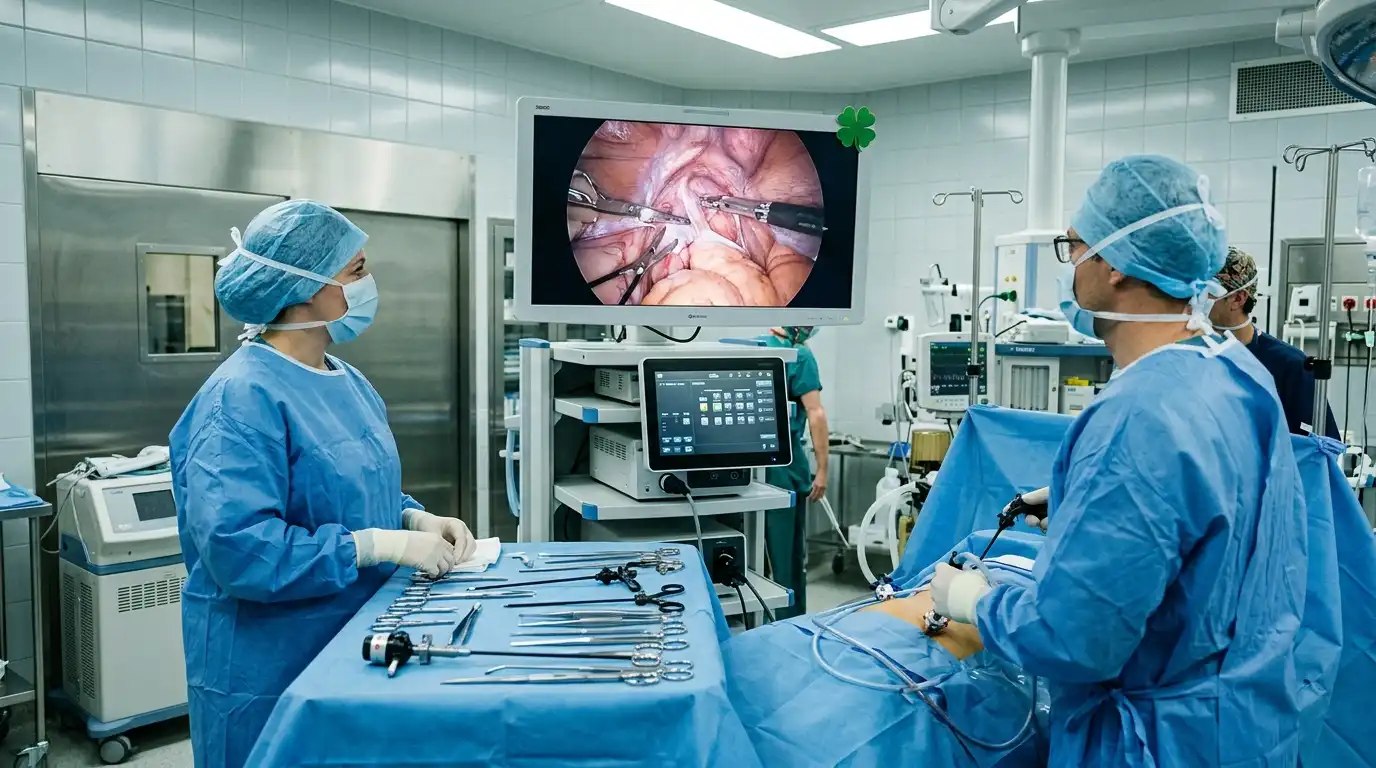
Laparoscopic Excision - Endometrioma - Deep Infiltrating Endometriosis

Endometriosis - the presence of endometrial-like tissue outside the uterus - affects approximately 10% of women of reproductive age and is a leading cause of debilitating pelvic pain, dysmenorrhoea, dyspareunia, and infertility. Definitive diagnosis and treatment require surgical laparoscopy: excision (not just ablation) of endometriotic lesions is the gold standard, providing superior pain relief and lower recurrence rates. BB Global Health partner hospitals have specialist endometriosis surgeons experienced in all stages - from superficial peritoneal endometriosis to complex deep infiltrating endometriosis (DIE) and endometriomas.

At a Glance

1-4 Hours Surgery
1-3 Nights Hospital
7-14 Days Hotel
2-6 Weeks Recovery
Discuss My Endometriosis
Specialist Endometriosis Surgeons
Excision Surgery (Not Just Ablation)
Fertility Preservation Expertise
50-60% Below UK Private
Understanding Endometriosis
Stages, Sites, and the Impact on Quality of Life

Understanding Endometriosis

Endometriosis is classified by the American Society for Reproductive Medicine (ASRM) into four stages (I-IV) based on extent at laparoscopy, and by anatomical sub-type:

Superficial peritoneal endometriosis:

  • Endometriotic deposits on the peritoneum of the pelvis, pelvic sidewalls, uterosacral ligaments
  • Can cause significant pain despite apparently limited extent; classification stage not reliably correlated with pain severity
  • Surgical excision under laparoscopy is the most effective treatment; ablation (burning) has higher recurrence

Ovarian endometrioma (chocolate cyst):

  • Endometriotic cyst within the ovary - filled with old blood (chocolate-coloured)
  • Causes pelvic pain, dyspareunia; impairs ovarian reserve (AMH levels reduce with increasing endometrioma size)
  • Management: cystectomy (excision of the cyst wall, not drainage alone) - preserves normal ovarian tissue; reduces recurrence vs. drainage

Deep Infiltrating Endometriosis (DIE):

  • Endometriosis growing >5 mm beneath the peritoneum; affects the uterosacral ligaments, rectovaginal septum, bowel, bladder, ureters
  • Causes severe cyclical pain, dyschezia (painful defaecation), dysuria, deep dyspareunia
  • Requires specialist multidisciplinary surgery: gynaecologist - colorectal surgeon - urologist for bowel/bladder resection
  • Complete excision of DIE achieves significantly better long-term outcomes than incomplete surgery

Endometriosis and fertility:

  • Mechanism: altered pelvic anatomy, adhesions distorting tubes, inflammatory cytokines impairing oocyte/embryo quality
  • Stage I-II endometriosis: controversial surgical benefit on fertility; IVF often preferred without surgery
  • Stage III-IV: laparoscopic treatment improves spontaneous conception rates; IVF success rates also higher post-excision than pre-operatively
Surgical Treatment of Endometriosis
Excision vs Ablation - Why Excision Wins

Surgical Treatment of Endometriosis

Why excision is superior to ablation: Ablation (burning/coagulating/laser vaporisation of visible lesions) leaves the underlying lesion root in situ - high recurrence rates (30-50% at 5 years). Excision - cutting out the endometriotic nodule with adequate margins - removes the entire lesion base: recurrence rates 5-15% at 5 years for skilled excision surgery.

Laparoscopic endometriosis excision: Under general anaesthesia; CO- pneumoperitoneum; thorough inspection and mapping of entire pelvis; systematic excision of all visible lesions using scissors/energy device with identification of both ureters.

Endometrioma cystectomy: The cyst is opened; contents evacuated; stripping technique - cyst wall stripped from ovarian cortex preserving normal follicle-bearing tissue. Haemostasis with minimal bipolar energy to protect ovarian reserve.

Advanced DIE surgery (multidisciplinary): For rectovaginal and bowel endometriosis:

  • Rectal shaving: Superficial rectal endometriosis removed tangentially from the rectal wall; no opening of bowel; used for <30% bowel wall involvement
  • Discoid resection: Full-thickness disc of bowel removed; stapled transverse closure; for focal deeper involvement
  • Segmental bowel resection: For extensive circumferential bowel involvement; requires colorectal surgeon; anastomosis fashioned
  • Bladder resection and ureteric re-implantation (neoureterostomy) for bladder dome and ureteric DIE
  • Available at partner hospitals with multidisciplinary endometriosis team (gynaecology + colorectal surgery)

Post-operative hormonal treatment: To extend disease-free interval after surgery: combined oral contraceptive pill continuously, progestagen (dienogest/Visanne), or GnRH agonist for 3-6 months reduces recurrence risk.
Recovery and Outlook After Surgery
Pain Relief, Fertility Results, and Recurrence Prevention

Recovery and Outlook After Surgery

Recovery after laparoscopic endometriosis excision:

  • Hospital: 1-3 nights (simple excision 1 night; bowel surgery 3-5 nights)
  • Hotel recovery: 7-10 days before flying
  • Return to light work: 1-2 weeks; full activity: 3-4 weeks
  • Bowel surgery recovery (segmental resection): 3-5 nights hospital; 14 days hotel; 4-6 weeks full recovery

Expected outcomes:

  • Pelvic pain improvement: 70-80% of women report significant reduction in dysmenorrhoea and CPP after complete excision
  • Dyspareunia improvement: 65-75% after rectovaginal endometriosis excision
  • Fertility (spontaneous conception): improved in Stage III-IV excision; 2-year pregnancy rates of 40-60% in women under 35 after complete staging laparoscopy
  • Recurrence: 15-20% symptomatic recurrence at 5 years after complete excision; higher rates if incomplete surgery

Fertility treatment after endometriosis surgery: If spontaneous conception has not occurred within 6-12 months post-surgery (or patient is over 35 years), IVF is the next step. BB Global Health coordinates IVF referral to partner IVF clinics.

Pre-operative investigation:

  • Pelvic ultrasound with gynaecological expertise: transvaginal ultrasound for endometrioma and DIE mapping
  • MRI pelvis: gold standard for mapping DIE, bowel, and ureteric involvement - critical for surgical planning
  • CA-125 (non-diagnostic but elevated in advanced disease; useful for monitoring)

Cost comparison: Simple endometriosis excision Turkey: -5,000-8,000 all-inclusive; UK private: -10,000-18,000. Advanced DIE surgery Turkey: -8,000-15,000; UK private: -18,000-35,000.

MRI Mapping to Complete Excision

Your Endometriosis Treatment Journey

Specialist endometriosis surgery with multidisciplinary team for advanced cases.

1

Share MRI and Ultrasound

Upload pelvic MRI, transvaginal ultrasound, gynaecology letters, surgery history, and symptom details.

2

Specialist Endometriosis Surgeon Review

Endometriosis specialist reviews extent of disease; plans simple excision or multidisciplinary DIE surgery.

3

Arrive - Pre-Op Imaging

MRI if not recent; bowel preparation if bowel surgery planned; anaesthesia review; consent.

4

Laparoscopic Excision Surgery

Complete laparoscopic excision under GA - endometrioma cystectomy, peritoneal excision, DIE resection as planned.

5

Recovery

1-3 nights hospital; 7-14 nights hotel recovery; hotel physio not required; walking from day 1.

6

Fertility and Follow-Up Plan

Operative MRI review at 3 months; hormonal treatment plan; fertility referral if needed; home gynaecologist letter.

Excision Specialists - DIE Expertise - Half the Cost

Why Endometriosis Surgery in Turkey?

Specialist excision endometriosis surgery - not just ablation - at accredited Turkish hospitals.

Speak to Our Team
Excision Not Ablation

The global endometriosis standard - complete excision of lesions and endometriomas for lowest recurrence rates.

Multidisciplinary DIE Team

Gynaecology + colorectal surgery collaboration for bowel endometriosis - the most complex cases managed.

50-60% Cost Saving

Endometriosis excision from -5,000 in Turkey vs. -10,000-18,000 UK private; DIE surgery from -8,000 vs. -18,000-35,000.

Fertility-Preserving Approach

Conservative surgery designed to maximise fertility - ovarian reserve protection during endometrioma cystectomy.

Accredited Gynaecology Centres

JCI-accredited hospitals with dedicated endometriosis programmes and minimally invasive gynaecology units.

BB Global Health Coordination

MRI review, surgical booking, operative documentation, hormonal protocol, and home gynaecology handover.

Patient Questions

Frequently Asked Questions

Can't find what you're looking for? Our coordination team is available 7 days a week.

Ask Our Team

Endometriosis can only be definitively diagnosed at laparoscopy - direct visualisation and biopsy of lesions. MRI and ultrasound can diagnose endometriomas and map DIE with high accuracy but cannot detect superficial peritoneal lesions. Diagnosis based on symptoms alone is not definitive. Many women with endometriosis have normal ultrasound and MRI - surgical laparoscopy confirms the diagnosis.

Repeat laparoscopic excision for recurrent endometriosis is possible at partner hospitals. Review of previous operative notes and new MRI is important - residual disease vs. new de novo lesions vs. adhesion-related pain have different management approaches. Repeat surgery in experienced hands has good outcomes but successively becomes more technically challenging with each procedure due to adhesions.

For endometriomas: cystectomy before IVF may improve oocyte retrieval access but evidence on pregnancy rates is mixed - some data shows lower AMH after cystectomy due to normal ovarian cortex loss. Size >4 cm and bilateral endometriomas are generally treated before IVF. For DIE: no clear evidence that DIE excision before IVF improves IVF outcomes, though pain relief improves quality of life during IVF.

For advanced DIE, robotic assistance provides better visualisation and articulated instrument movement in the deep pelvis - particularly useful for rectovaginal and ureteric dissection. For superficial endometriosis and endometriomas, standard laparoscopy by an experienced endometriosis surgeon is equivalent. Robotic surgery is available at select partner hospitals.

To reduce recurrence after surgery, continuous hormonal suppression is recommended - combined oral contraceptive pill (taken back-to-back without monthly breaks), dienogest (Visanne, a progestagen with strong anti-endometriotic effect), or a GnRH agonist for 3-6 months. Specific choice depends on whether pregnancy is planned (no hormonal treatment if trying to conceive). Full protocol provided by the treating gynaecologist.

Important Notice: BB Global Health is a medical travel coordination company. We facilitate access to internationally accredited hospitals and specialist physicians in Turkey. All medical decisions, diagnoses, and treatment plans are made solely by the treating physicians at our partner institutions. Information on this page is for general guidance only and does not constitute medical advice. Individual outcomes vary. Please consult your physician before making any healthcare decision.

Expert Endometriosis Surgery in Turkey

Share your pelvic MRI and symptom history for a free specialist endometriosis assessment. Complete excision surgery for all stages including DIE.

Book an Appointment

Why Choose Our Medical Tourism Services?

Expert medical partner network

JCI-accredited hospital partnerships

Comprehensive patient coordination

Multilingual support team

Free Online Consultation WhatsApp Support