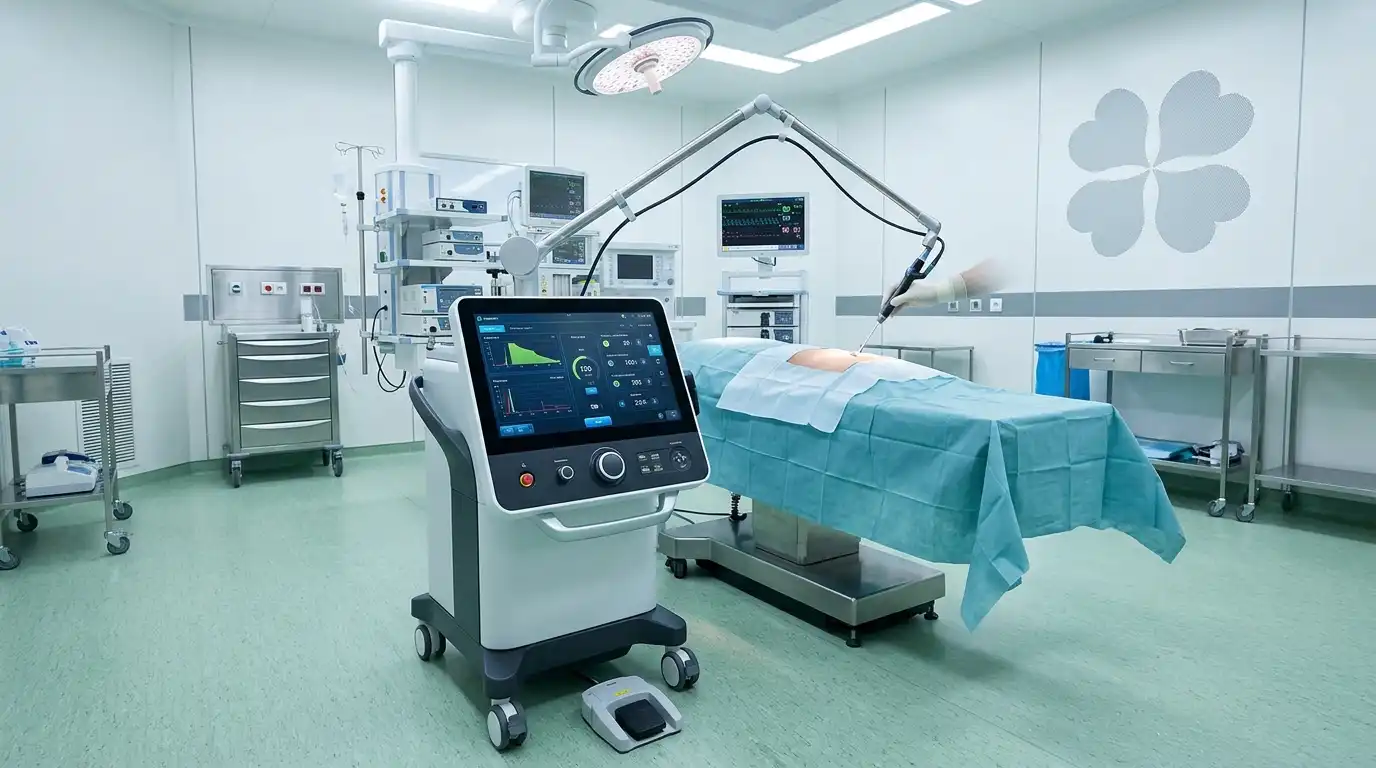
Laser URS - Flexible URS - PCNL - ESWL - Stone Prevention

Kidney Stone Treatment in Turkey

Laser Ureteroscopy - PCNL - ESWL - All Stone Types

Kidney stones (urolithiasis) affect 10-15% of the population, with a high recurrence rate. Modern stone treatment is predominantly minimally invasive - laser ureteroscopy (URS), percutaneous nephrolithotomy (PCNL) for large stones, and ESWL (extracorporeal shock wave lithotripsy) for smaller stones. BB Global Health partner hospitals offer all three modalities with same-day or next-day scheduling, comprehensive pre-operative stone profiling, and metabolic evaluation to guide prevention.

At a Glance

45 Minutes - 3 Hours Surgery
1-3 Nights Hospital
4-7 Days Hotel
1-2 Weeks Recovery
Discuss My Stone Treatment
Accredited Hospitals
Holmium Laser Technology
Rapid Scheduling
All-Inclusive Package
Kidney Stone Treatment Options
Matching the Procedure to the Stone

Kidney Stone Treatment Options

The appropriate treatment for a kidney stone depends on size, location, composition (if known), symptoms, and patient factors. Modern minimally invasive approaches allow treatment of stones up to 3+ cm without open surgery.

ESWL (Extracorporeal Shock Wave Lithotripsy):

  • Non-invasive; focused shock waves generated outside the body break the stone into passable fragments
  • Best for: stones <10mm in kidney or upper ureter; soft stones (calcium oxalate monohydrate less responsive)
  • Session: 45-60 minutes, outpatient; mild sedation or no sedation
  • May require 1-2 sessions for complete fragmentation
  • Not suitable for: large stones >15mm, lower pole kidney stones, hard stone compositions (monoclinic brushite, calcium oxalate monohydrate), obesity limiting targeting, uncorrected coagulopathy

Ureteroscopy (URS) - Rigid and Flexible:

  • Endoscope passed through the urethra and bladder into the ureter or kidney (flexible URS allows access to all calyces)
  • Holmium laser (or newer Thulium fiber laser) fragments the stone; fragments removed with basket
  • Most effective treatment for ureteral stones of any size and renal stones <20mm
  • General or spinal anaesthesia; 60-90 minutes; 1-night hospital; DJ stent left in 1-2 weeks
  • “Dusting” technique: laser pulverises stone to fine dust that passes spontaneously - no basket needed
  • Stone-free rate: 90-95% for ureteral stones; 80-90% for renal stones <20mm

PCNL (Percutaneous Nephrolithotomy):

  • For large renal stones (>20mm) or staghorn calculi that cannot be addressed with ESWL or URS
  • 1-2 cm skin incision on the back; access tract created directly into the kidney under X-ray guidance
  • Nephroscope inserted; stone fragmented and removed in fragments
  • Mini-PCNL and ultra-mini-PCNL (smaller tracts) available for moderate stones
  • General anaesthesia; 1.5-3 hours; 2-3 night hospital stay; nephrostomy tube for 24-48 hours
  • Stone-free rate: 85-95% for large stones

Stone composition and prevention: Analysis of retrieved stone material guides metabolic evaluation and prevention (dietary advice, pharmacological prevention). 24-hour urine collection and blood metabolic tests identify the underlying cause (hypercalciuria, hyperoxaluria, hyperuricosuria, hypocitraturia). This is important - without prevention, 50% of patients have a recurrent stone within 5 years.
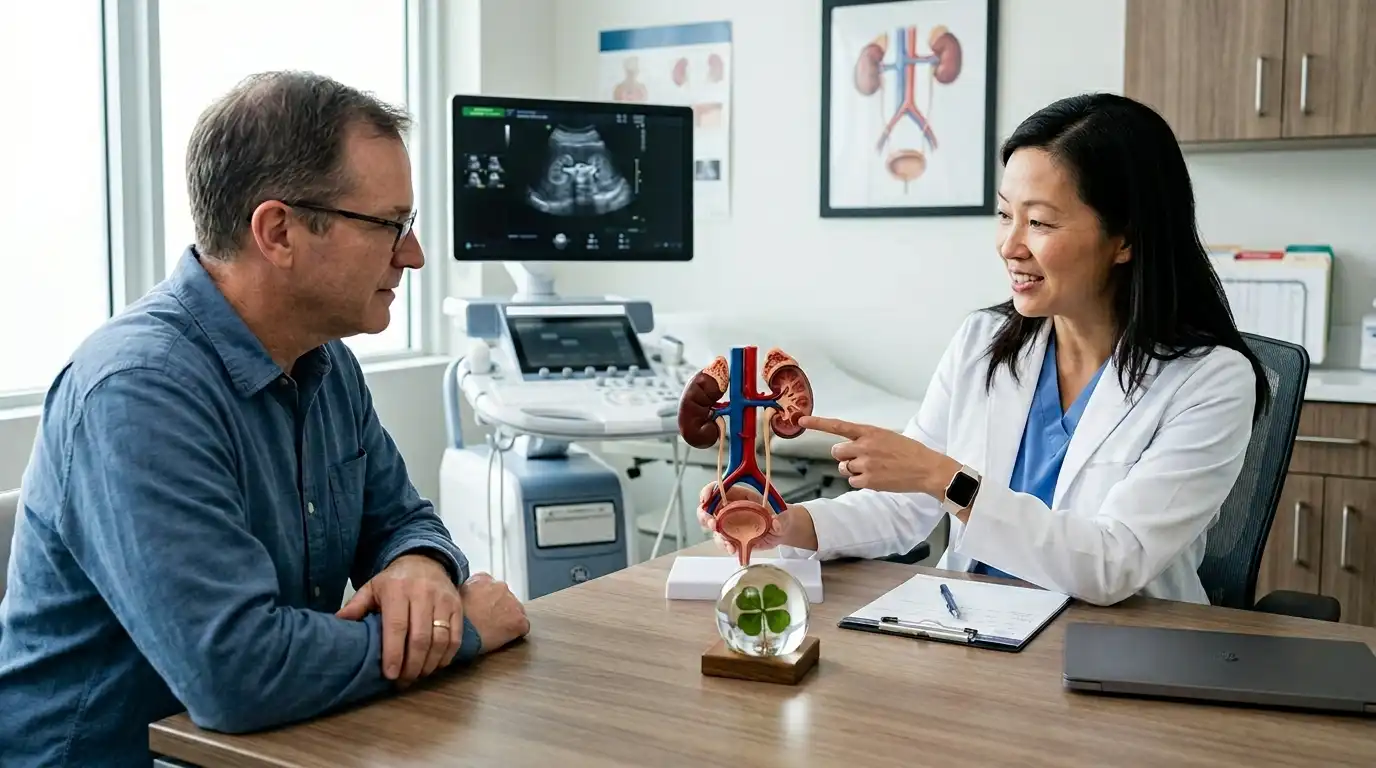
The Treatment Journey
From Imaging to Stone-Free Status

The Treatment Journey

Pre-operative workup:

  • CT KUB (non-contrast kidney-ureter-bladder CT): gold standard for stone diagnosis and sizing - 100% sensitive vs. ~60% for ultrasound; defines stone location exactly
  • Urine culture: UTI excluded or treated before instrumentation
  • Blood tests: renal function, urine analysis
  • Share your CT report or images with BB Global Health before travel for pre-planning

For URS - Surgery Day:

  • Spinal or general anaesthesia
  • Flexible URS with holmium laser: 60-90 minutes
  • DJ ureteral stent placed at end (maintains ureter drainage while swelling resolves)
  • 1-night hospital stay; discharge with stent in situ
  • Stent removed at 1-2 week cystoscopy (planned before departure to home, or performed in home country)

DJ stent symptoms: Ureteral stents cause mild urinary frequency, urgency, and mild dysuria - expected symptoms. Long-acting alpha-blockers (tamsulosin) reduce stent symptoms significantly. Pain on urination peaks at stent removal (5-minute office procedure under no or topical anaesthesia).

PCNL - Surgery Day:

  • General anaesthesia; prone position (patient lying face down)
  • Access tract under fluoroscopic (X-ray) guidance; nephroscope inserted
  • Holmium laser or ultrasonic lithotripsy fragments stone; fragments irrigated out
  • Nephrostomy tube placed; removed next day if no bleeding
  • 2-3 night hospital stay; 5-7 day hotel recovery

Post-operative follow-up:

  • CT at 6-8 weeks confirms stone-free status
  • Stone analysis results available 2-4 weeks post-op
  • Metabolic workup (urine collection, blood tests) at 4-6 weeks for recurrence prevention
Recurrent Stones - Metabolic Evaluation
Understanding Why Stones Form

Recurrent Stones - Metabolic Evaluation

Kidney stone recurrence is common - 50% at 5 years for first stones. Identifying the metabolic cause enables targeted prevention and dramatically reduces recurrence rates.

Common metabolic causes:

Cause Stone Type Treatment
Hypercalciuria Calcium oxalate, calcium phosphate Low sodium diet, thiazide diuretics
Hyperoxaluria Calcium oxalate Low oxalate diet, pyridoxine
Hypocitraturia Calcium stones, uric acid Potassium citrate supplementation
Hyperuricosuria Uric acid, calcium oxalate Low purine diet, allopurinol
Low urine volume All types High fluid intake (2.5-3L/day)
Primary hyperparathyroidism Calcium stones Parathyroid surgery
Cystinuria Cystine stones High fluid intake, urinary alkalinisation

Metabolic evaluation at BB Global Health partner hospitals:

  • 24-hour urine - 2 collections (calcium, oxalate, urate, citrate, creatinine, volume, pH)
  • Serum calcium, phosphate, urate, PTH (for hyperparathyroidism screening)
  • Results reviewed by urologist + nephrologist if indicated

Dietary recommendations for most stone formers:

  • High fluid intake: ?2.5 litres urine output/day (most important intervention - reduces stone risk 40%)
  • Moderate dietary calcium (do NOT restrict - restricts oxalate-binding in gut, paradoxically increases calcium oxalate stones)
  • Low dietary sodium (reduces renal calcium excretion)
  • Low animal protein (reduces uric acid, lowers urinary calcium)
Rapid Assessment to Stone-Free Status

Your Kidney Stone Treatment Journey

Most stone procedures are completed in a single Turkey visit of 4-7 days.

1

Share CT Report

Provide your CT KUB report with stone measurements. Our urologist recommends the appropriate procedure (ESWL / URS / PCNL).

2

All-Inclusive Package

Surgery, hospital, anaesthesia, stent removal (if applicable), hotel, and transfers - one package price.

3

Arrival and Pre-Op

Arrival in Istanbul; pre-op bloods, urine culture, anaesthesia assessment.

4

Stone Treatment

URS (45-90 min), PCNL (1.5-3 hours), or ESWL (outpatient) - then 1-3 night hospital stay.

5

Stent Removal or Observation

DJ stent removed before departure or arranged for home country removal with our documentation.

6

Metabolic Follow-Up

Stone analysis and 24-hour urine metabolic evaluation coordinated after return - with prevention advice from our urologist.

Full Endourology Capability - Fast Scheduling

Why Kidney Stone Treatment in Turkey?

Turkey's urological hospitals offer the full range of stone treatments, often with same-week scheduling.

Speak to Our Team
Holmium and Thulium Laser

Current-generation laser systems for URS - holmium laser and newer Thulium fiber laser (higher absorption, more efficient dusting) both available.

Rapid Scheduling

Unlike NHS waiting lists of months, stone procedures can be scheduled within days of arrival in Turkey.

50-60% Cost Savings

URS all-inclusive from -2,500-3,500 in Turkey vs. -5,000-9,000 in UK private. PCNL from -4,500 vs. -12,000-20,000 in UK private.

Stone Analysis and Metabolic Workup

Full metabolic evaluation to identify stone-forming cause and guide prevention - addressing the problem, not just the symptom.

Accredited Endourology Centres

Partner hospitals with dedicated endourology suites, fluoroscopy, and experienced endourological teams.

BB Global Health Coordination

Pre-op imaging review, trip planning, stent removal coordination, and metabolic follow-up all managed through a single contact.

Patient Questions

Frequently Asked Questions

Can't find what you're looking for? Our coordination team is available 7 days a week.

Ask Our Team

The key factor is stone size and location. Stones <10mm in the ureter or kidney: ESWL or URS. Stones 10-20mm: flexible URS. Stones >20mm or complex staghorn calculi: PCNL or combination approach. Composition also matters - some stones don't fragment with ESWL. Share your CT report and our urologist will recommend the appropriate approach.

The procedure itself is under anaesthesia - no pain. The DJ ureteral stent left in afterwards causes mild urinary frequency and occasional discomfort that most patients manage with alpha-blockers and analgesics. Stent removal (1-2 weeks later) is a brief office procedure causing mild temporary discomfort lasting minutes.

Yes - DJ stents are designed to allow normal activity. Airline travel with a stent is completely safe. The stent is removed at 1-2 weeks via cystoscopy - this can be done either in Turkey before departure (Day 5-7 post-procedure) or arranged with a local urologist in the home country using BB Global Health's clinical documentation.

URS: ureteral injury (<1%), infection (<3%), residual fragments (<10%), stent-related symptoms (expected). PCNL: bleeding requiring transfusion (2-3%), infection, residual fragments. ESWL: skin bruising, passage of fragments (can cause temporary ureteral colic), rarely incomplete fragmentation. All serious complications are manageable in hospital. Stone treatment is considered low-risk for most patients.

If the stone has passed, treatment for that stone is complete. However, if stones are present elsewhere in the kidney (detected on your CT), they should be discussed - residual stones will eventually cause symptoms or growth. Additionally, metabolic evaluation to prevent future stone formation is strongly recommended regardless of whether the acute stone passed spontaneously.

Important Notice: BB Global Health is a medical travel coordination company. We facilitate access to internationally accredited hospitals and specialist physicians in Turkey. All medical decisions, diagnoses, and treatment plans are made solely by the treating physicians at our partner institutions. Information on this page is for general guidance only and does not constitute medical advice. Individual outcomes vary. Please consult your physician before making any healthcare decision.

Resolve Your Kidney Stone - Expert Care in Turkey

Share your CT KUB report for a free remote assessment and treatment recommendation. All-inclusive kidney stone treatment packages with rapid scheduling.

Book an Appointment

Why Choose Our Medical Tourism Services?

Expert medical partner network

JCI-accredited hospital partnerships

Comprehensive patient coordination

Multilingual support team

Free Online Consultation WhatsApp Support