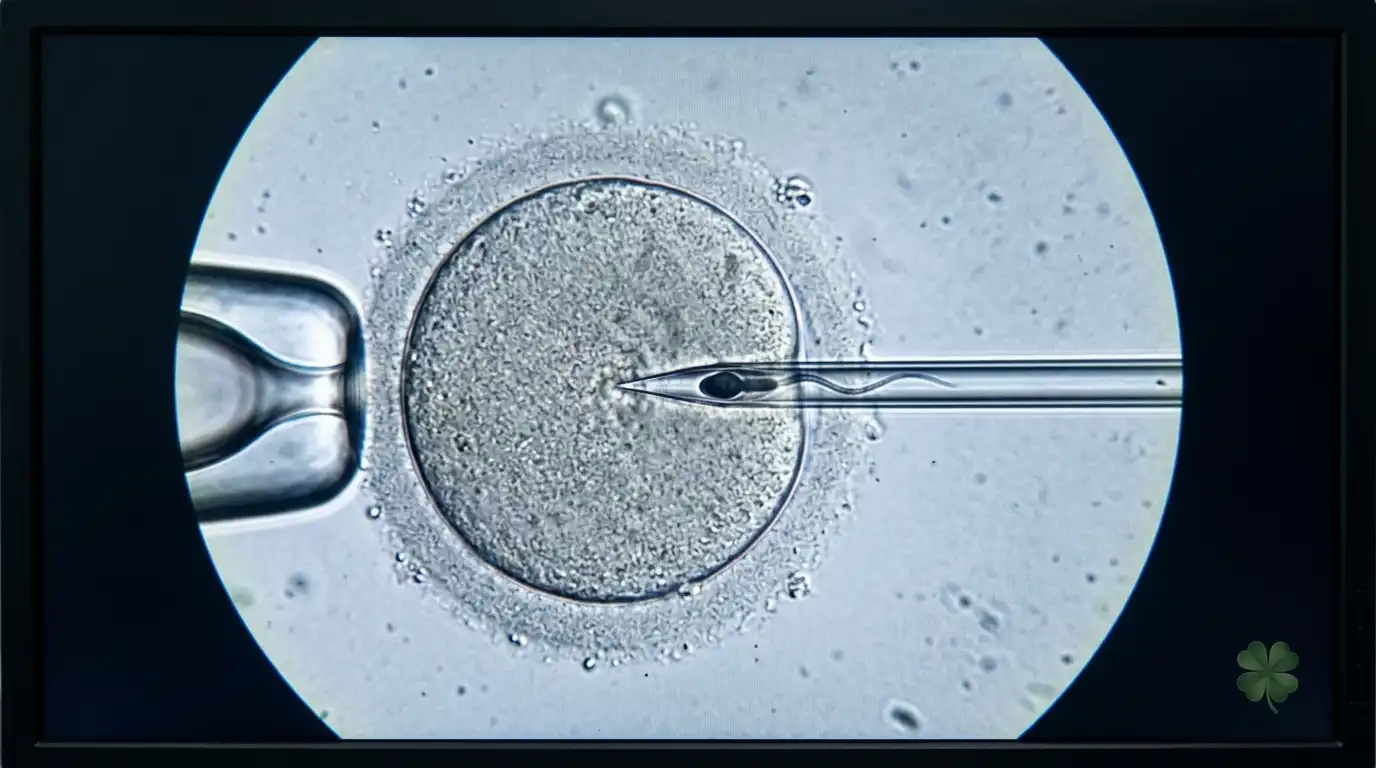
ICSI - TESE - PESA - DNA Fragmentation - IMSI

ICSI Treatment in Turkey

Intracytoplasmic Sperm Injection - TESE - PESA - Male Factor Infertility

ICSI (intracytoplasmic sperm injection) is the gold-standard treatment for male factor infertility - a single selected sperm is injected directly into each mature oocyte, bypassing the natural fertilisation barriers. For men with no sperm in the ejaculate (azoospermia), surgically retrieved sperm via TESE (testicular sperm extraction) or PESA (percutaneous epididymal sperm aspiration) can be used. BB Global Health partner fertility clinics provide the full range of advanced male factor infertility treatments alongside ICSI.

At a Glance

ICSI: Egg Collection Day Surgery
Day Case Hospital
10-14 Days Hotel
2-3 Days (TESE: 5-7 Days) Recovery
Discuss Male Infertility
Andrology & Fertility Specialists
TESE/PESA Sperm Retrieval
IMSI High-Magnification
40-55% Below UK Costs
Male Factor Infertility and When ICSI is Needed
Semen Analysis, DNA Fragmentation, and Azoospermia

Male Factor Infertility and When ICSI is Needed

Male factor infertility accounts for approximately 40-50% of all infertility cases. ICSI overcomes most barriers to fertilisation when sufficient motile sperm exist. For men without sperm in the ejaculate, surgical retrieval techniques are required.

Complete semen analysis - WHO 2021 reference values:

  • Volume: ?1.4 mL
  • Total motility: ?42%
  • Progressive motility: ?30%
  • Morphology (Kruger strict): ?4% normal forms
  • Total sperm count: ?39 million per ejaculate

Abnormalities below these thresholds indicate:

  • Oligospermia: Low sperm count - mild (<15M/mL), moderate (<5M/mL), severe (<1M/mL)
  • Asthenospermia: Poor motility
  • Teratospermia: Abnormal morphology
  • OAT syndrome: Combined oligo-astheno-teratospermia
  • Azoospermia: No sperm in ejaculate - obstructive (normal spermatogenesis; blocked outflow) vs. non-obstructive (impaired spermatogenesis)

Sperm DNA Fragmentation (SDF): Standard semen analysis does not assess sperm nuclear DNA integrity. SDF >25% correlates with reduced IVF/ICSI fertilisation rates, poor embryo development, recurrent miscarriage, and recurrent IVF failure. SDF testing (TUNEL or SCD assay) is recommended for:

  • Recurrent (?2) miscarriage
  • Previous failed IVF/ICSI cycles (?2) with good embryo quality
  • Varicocele
  • Significant lifestyle factors (obesity, smoking, heat exposure)

Indications for ICSI (rather than standard IVF):

  • Severe oligospermia or OAT syndrome
  • Any surgically retrieved sperm (TESE/PESA)
  • Previous poor fertilisation (<25%) with standard IVF
  • High SDF
  • Frozen-thawed sperm
  • PGT-A cycles (to avoid contamination from binding sperm)
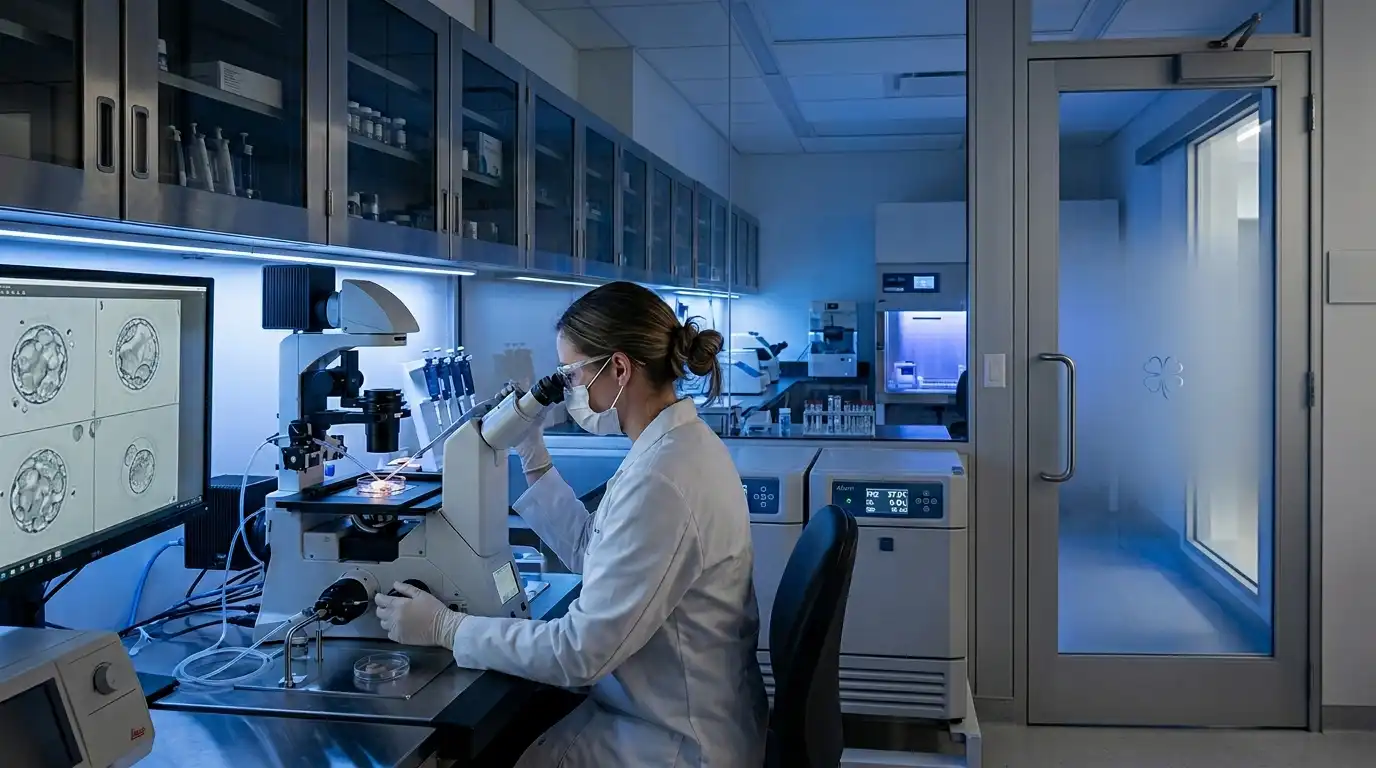
TESE and PESA - Surgical Sperm Retrieval
Options for Azoospermia and Ejaculatory Dysfunction

TESE and PESA - Surgical Sperm Retrieval

Obstructive azoospermia (OA): Normal sperm production but blocked or absent vas deferens/epididymis (e.g., post-vasectomy, congenital bilateral absence of vas deferens [CBAVD], prior infection). High sperm retrieval rates - PESA or conventional TESE almost always successful.

PESA (Percutaneous Epididymal Sperm Aspiration):

  • Fine needle inserted into the epididymis under local anaesthesia
  • Sperm aspirated; best suited to obstructive azoospermia
  • 15-30 minute procedure; discharge same day
  • Multiple attempts can be made; samples cryopreserved for future ICSI cycles
  • Success: >90% in obstructive azoospermia

Conventional TESE (Testicular Sperm Extraction):

  • Small incision in testis under local anaesthesia + sedation; small biopsy segments taken from different areas
  • Sperm identified by embryologist in lab; cryopreserved if found
  • Success: >90% in obstructive; 30-50% in non-obstructive azoospermia

micro-TESE (Microsurgical TESE):

  • Gold standard for NOA (non-obstructive azoospermia) - Sertoli cell-only syndrome, hypospermatogenesis, maturation arrest
  • Performed under operating microscope at 20- magnification - identifies tubules likely to contain sperm (appear larger/more opaque)
  • Overall NOA success: 40-60% (vs. 30-45% conventional TESE in NOA); significantly higher yield in Sertoli cell-only syndrome
  • Requires general/spinal anaesthesia; 1-night hospital stay; recovery 5-7 days
  • Available at select partner hospitals with microsurgery-trained urologist/andrologist

Sperm cryopreservation: All surgically retrieved sperm can be vitrified and stored for future ICSI cycles - avoiding the need to coordinate retrieval with oocyte collection. Men with confirmed NOA may consider sperm banking from a successful micro-TESE before their partner undergoes ovarian stimulation.

IMSI (Intracytoplasmic Morphologically Selected Sperm Injection): High-magnification (6,600- vs. 400- standard) sperm selection before ICSI injection - identifies and avoids sperm with nuclear vacuoles (associated with DNA fragmentation and poor embryo quality). Recommended for:

  • Recurrent IVF failure
  • Severe teratospermia (all or nearly all abnormal forms)
  • High SDF
ICSI Outcomes and Costs
Fertilisation, Embryo Development, and Cost Comparison

ICSI Outcomes and Costs

ICSI fertilisation and embryo development:

  • Normal fertilisation rate (2PN): 65-80% of mature (MII) oocytes injected
  • Blastocyst development (Day 5/6): 40-55% of fertilised eggs progress to blastocyst
  • Usable blastocyst rate: approximately 30-50% of mature oocytes injected - depends on age, ovarian reserve, and underlying diagnosis

ICSI success rates (own sperm + own eggs):

Age Fresh/FET blastocyst SET With PGT-A
<35 45-55% 60-70%
35-37 35-45% 55-65%
38-40 22-35% 48-58%
>40 12-25% 42-52%

ICSI with TESE (day of retrieval sperm vs. frozen): Fresh TESE sperm on day of egg collection is preferred when reliably available - frozen TESE samples give equivalent outcomes for obstructive azoospermia; data for NOA is slightly lower with frozen vs. fresh in some studies.

Cost comparison Turkey vs. UK:

Service Turkey UK Private
ICSI (included in IVF package) +-400-600 +-1,000-1,500
PESA -600-1,000 -1,500-2,500
Conventional TESE -800-1,500 -2,000-3,500
micro-TESE -2,500-4,000 -5,000-10,000
IMSI (per cycle) +-400-600 +-800-1,200
Sperm DNA fragmentation test -150-250 -300-500

Complete IVF-ICSI cycle (own eggs, own sperm) Turkey: -3,000-5,000; UK: -6,000-10,000

Lifestyle optimisation before ICSI: Sperm DNA fragmentation is modifiable: antioxidant supplementation (CoQ10 600mg/day, Vitamins C/E, Lycopene, Selenium) for at least 3 months before cycle; smoking cessation; weight loss if BMI >30; avoid testicular heat; treat varicocele if Grade 2-3 before stimulation.

Specialist Assessment to Successful Fertilisation

Your ICSI Treatment Journey

Comprehensive male infertility assessment and ICSI treatment at partner fertility clinics.

1

Send Semen Analysis

Share full WHO semen analysis, SDF results if available, any previous fertility investigations.

2

Andrology and Fertility Review

Andrologist and REI specialist review results; plan investigation or treatment; azoospermia patients referred for TESE assessment.

3

TESE or PESA (if needed)

Surgical sperm retrieval coordinated with egg collection or performed ahead of time with cryopreservation.

4

Egg Collection and ICSI

Oocyte retrieval from your partner; ICSI (or IMSI) performed by senior clinical embryologist.

5

Embryo Culture and Transfer

Blastocyst culture in EmbryoScope; PGT-A if selected; best embryo transferred; surplus vitrified.

6

Pregnancy Test and Follow-Up

Beta-hCG at 10-14 days; full discharge documentation; positive result - obstetric handover.

Andrology Expertise - micro-TESE - Advanced Embryology

Why ICSI in Turkey?

Complete male infertility services alongside advanced ICSI embryology at accredited fertility centres.

Speak to Our Team
Advanced ICSI Embryology

Senior clinical embryologists performing ICSI, IMSI, and comprehensive embryo assessment with timelapse technology.

micro-TESE Expertise

Microsurgery-trained andrologists/urologists performing micro-TESE for non-obstructive azoospermia.

Significant Cost Savings

ICSI treatment including micro-TESE from -5,000-8,000 vs. -10,000-18,000 in the UK.

SDF Testing and IMSI

Routine sperm DNA fragmentation testing; IMSI available for selection of sperm with lowest DNA damage.

Accredited Fertility Centres

MOH-accredited fertility laboratories with published clinical outcomes and quality management systems.

Coordinated Care

All aspects coordinated by BB Global Health - from your UK andrology results to Turkish fertility clinic.

Patient Questions

Frequently Asked Questions

Can't find what you're looking for? Our coordination team is available 7 days a week.

Ask Our Team

Standard IVF (without ICSI) is used when semen analysis is normal with progressive motility >30%, morphology >4%, and count >15M/mL - and no previous fertilisation failure. If any parameter is borderline, or for PGT-A cycles, ICSI is preferred. Around 60-70% of IVF cycles in Turkey now use ICSI to maximise fertilisation security.

Yes. Post-vasectomy obstructive azoospermia is one of the most treatable causes - PESA or conventional TESE will retrieve sperm in >95% of cases. Sperm can be cryopreserved; your partner then undergoes IVF-ICSI. Vasectomy reversal is an alternative (best results <10 years post-vasectomy) - we can advise on both options based on duration of vasectomy and partner age.

Non-obstructive azoospermia (NOA) means sperm production in the testis is severely impaired - caused by Klinefelter syndrome, genetic deletions (Y-chromosome microdeletion), prior chemotherapy, or idiopathic failure. micro-TESE finds sperm in 40-60% of NOA cases - meaning a significant proportion of men with NOA can achieve biological paternity. Y-chromosome AZFa and AZFb deletions carry very poor prognosis; AZFc deletion has better outcomes. Genetic testing before micro-TESE is essential.

Cryopreserved sperm remains viable indefinitely when stored in liquid nitrogen (-196-C). Sperm banks store samples for 10+ years routinely. Survival (thaw rates) for cryopreserved TESE sperm: 40-70%; for ejaculated sperm: 50-80%. For men with NOA, we recommend cryopreserving multiple samples from micro-TESE to provide sperm for future FET cycles.

Donor sperm IVF/ICSI is available for couples where surgical retrieval is unsuccessful or where the male partner is absent. Turkish-registered anonymous sperm donors are screened for genetics, infectious disease, and physical characteristics. The legal and consent process for donor sperm is explained fully before treatment initiation.

Important Notice: BB Global Health is a medical travel coordination company. We facilitate access to internationally accredited hospitals and specialist physicians in Turkey. All medical decisions, diagnoses, and treatment plans are made solely by the treating physicians at our partner institutions. Information on this page is for general guidance only and does not constitute medical advice. Individual outcomes vary. Please consult your physician before making any healthcare decision.

ICSI and Male Infertility Treatment in Turkey

Send your semen analysis for a free specialist andrology and fertility assessment. ICSI, TESE, micro-TESE, and IMSI at accredited Turkish fertility clinics.

Book an Appointment

Why Choose Our Medical Tourism Services?

Expert medical partner network

JCI-accredited hospital partnerships

Comprehensive patient coordination

Multilingual support team

Free Online Consultation WhatsApp Support