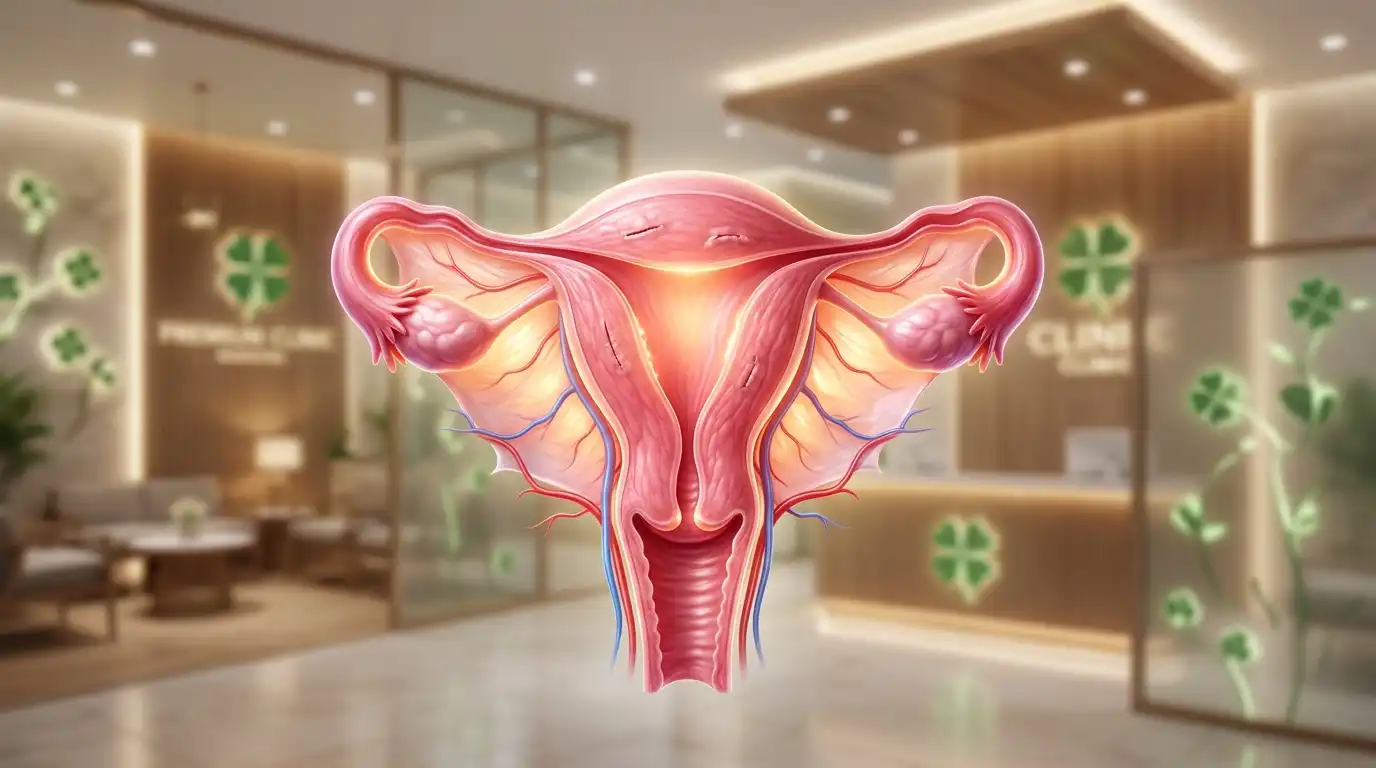
Laparoscopic Myomectomy - Hysteroscopic - UAE - Fertility-Preserving

Uterine Fibroid Treatment in Turkey

Laparoscopic Myomectomy - Hysteroscopic Resection - UAE

Uterine fibroids (leiomyomata) affect up to 70% of women by the age of 50, and approximately 25% experience significant symptoms - heavy menstrual bleeding, pelvic pain, pressure, and fertility issues. Modern fibroid treatment offers multiple fertility-preserving options including laparoscopic myomectomy (key-hole fibroid removal), hysteroscopic resection (for submucous fibroids), and uterine artery embolisation (UAE - blocking fibroid blood supply). BB Global Health partner hospitals offer the full range of fibroid treatments performed by specialist gynaecologists and interventional radiologists.

At a Glance

1-3 Hours Surgery
1-2 Nights Hospital
5-10 Days Hotel
2-6 Weeks Recovery
Discuss My Fibroid
Accredited Gynaecology Centres
Minimally Invasive Surgery
Fertility-Preserving Options
50-60% Below UK Private
Understanding Uterine Fibroids
Types, Locations, and Symptoms

Understanding Uterine Fibroids

Fibroids are benign smooth muscle tumours of the uterus. They are classified by location - which determines symptoms and appropriate treatment:

FIGO fibroid classification (leiomyoma subclassification):

  • Type 0 (completely intracavitary pedunculated submucosal): Protruding into the uterine cavity on a stalk
  • Type 1 (partially intracavitary submucosal): >50% in the cavity
  • Type 2 (submucosal): <50% in the cavity
  • Types 3-5 (intramural): Ranging from abutting the cavity to entirely within the myometrium
  • Types 6-7 (subserosal): Projecting towards the serosa - pedunculated or sessile

Symptoms by fibroid location:

  • Submucosal (Types 0-2): Heavy menstrual bleeding, irregular bleeding, infertility, recurrent miscarriage - the most clinically significant types for symptoms
  • Intramural (Types 3-5): Heavy periods, pelvic pressure, bladder symptoms, dyspareunia; large intramural fibroids impair implantation
  • Subserosal (Types 6-7): Pelvic pressure, urinary frequency, constipation; rarely cause heavy bleeding; large pedunculated fibroids occasionally undergo torsion

Fibroid growth: Fibroids are oestrogen-dependent - they grow during reproductive years and typically regress after menopause. GnRH analogues (Zoladex, Decapeptyl) and ulipristal acetate can temporarily shrink fibroids before surgery, improving surgical conditions.
Treatment Options for Uterine Fibroids
Matched to Fibroid Type, Size, and Patient Goals

Treatment Options for Uterine Fibroids

Hysteroscopic Myomectomy (for submucosal fibroids Types 0-2):

  • Resectoscope introduced through the cervix without any incisions
  • FIGO Type 0-1 fibroids: complete resection in a single procedure
  • Type 2 fibroids: may require staged resection
  • Day case or 1-night admission; return to work in 1-2 weeks
  • Highly effective for heavy bleeding and fertility improvement

Laparoscopic Myomectomy (for intramural and subserosal fibroids):

  • 3-4 small port incisions; fibroids removed through a morcellator retrieval bag (contained power morcellation for safety)
  • Uterine wall meticulously repaired in layers laparoscopically - requires advanced suturing skill
  • Preserves the uterus; suitable for women wishing future pregnancy
  • Hospital: 1-2 nights; recovery: 2-4 weeks vs. 4-6 weeks open myomectomy
  • Fertility outcome: conception rates 50-60% within 2 years post-laparoscopic myomectomy; caesarean section recommended for delivery after myomectomy involving deep myometrial repair

Robotic Myomectomy:

  • da Vinci robot assistance for large or multiple intramural fibroids - superior suturing precision for myometrial repair
  • Available at select partner hospitals

Open Myomectomy (laparotomy):

  • Reserved for: very large fibroids (>15-18 cm), multiple fibroids making laparoscopic morcellation impractical, or when anatomy precludes laparoscopic access
  • Pfannenstiel incision; 3-5 nights hospital; 6 weeks recovery

Uterine Artery Embolisation (UAE):

  • Interventional radiology procedure: catheter via femoral artery; particles injected into uterine arteries - fibroids devascularised and infarct/shrink
  • Fibroid volume reduction: 30-60% at 6 months; symptom relief in 85% of women
  • No incisions; 1-2 night admission; return to work: 1-2 weeks
  • Not recommended for women planning future pregnancy (risk of uterine ischaemia affecting endometrial receptivity)
  • Ideal for women with multiple fibroids, or post-menopausal women seeking alternatives to surgery

Fertility After Fibroid Treatment
Which Treatment Best Preserves Your Fertility?

Fertility After Fibroid Treatment

Fibroid treatment selection in women wishing to conceive must carefully balance fibroid removal effectiveness against impact on uterine integrity and endometrial function:

Hysteroscopic myomectomy:

  • Best option for submucosal fibroids impairing implantation
  • No effect on uterine wall integrity - no restriction on subsequent delivery mode
  • Improves clinical pregnancy rates in women with submucosal fibroids undergoing IVF

Laparoscopic myomectomy:

  • Removes intramural and subserosal fibroids; uterus preserved
  • Deep myometrial repair: caesarean delivery recommended for subsequent pregnancy (uterine rupture risk during labour - low but present after full-thickness myometrial repair)
  • Time to conception: wait 3-6 months post-op for uterine healing before attempting conception

UAE - not recommended if future pregnancy desired:

  • May impair endometrial blood supply and ovarian reserve
  • Pregnancy after UAE is associated with higher preterm delivery and miscarriage rates
  • Women wishing to conceive should choose myomectomy over UAE

Pre-operative MRI: Essential for planning all fibroid surgeries - accurately maps fibroid number, size, location, depth, and relationship to the endometrial cavity. MRI data directly guides the decision between hysteroscopic, laparoscopic, or open approach for each patient.

Cost comparison: Hysteroscopic myomectomy Turkey: -3,500-6,000; UK private: -7,000-12,000. Laparoscopic myomectomy Turkey: -5,500-9,000; UK private: -12,000-20,000. UAE Turkey: -4,000-7,000; UK private: -9,000-15,000.

From MRI to Fibroid-Free

Your Fibroid Treatment Journey

Tailored fibroid treatment - selected based on fibroid type, size, and your personal goals.

1

Share Pelvic MRI or Ultrasound

Upload pelvic ultrasound, MRI if available, gynaecology letters, menstrual history, and fertility goals.

2

Gynaecologist Review

Specialist gynaecologist reviews fibroid mapping; recommends hysteroscopic, laparoscopic, or UAE approach.

3

Arrive - Pre-Op Assessment

MRI if not recent; blood tests; pelvic examination; anaesthesia review.

4

Fibroid Procedure

Hysteroscopic resection, laparoscopic myomectomy, or UAE (1-3h); minimal scarring.

5

Recovery and Hotel

1-2 nights hospital; 5-10 nights hotel recovery before flying home.

6

Fertility and Follow-Up Plan

Post-op MRI at 3 months; fertility timeline guidance; operative report and home gynaecologist letter provided.

Specialist Gynaecologists - Full Range of Options

Why Fibroid Treatment in Turkey?

Complete fibroid treatment portfolio - hysteroscopic, laparoscopic, robotic, and UAE.

Speak to Our Team
Minimally Invasive Expertise

High-volume laparoscopic and hysteroscopic myomectomy surgeons - complex fibroid cases routinely treated.

Fertility-Centred Care

Treatment selection tailored to fertility goals - UAE only recommended when fertility preservation is not required.

50-60% Cost Saving

Laparoscopic myomectomy from -5,500 in Turkey vs. -12,000-20,000 UK private.

Pelvic MRI Planning

MRI fibroid mapping precedes all surgical decisions - no guesswork in fibroid localisation.

Accredited Gynaecology Centres

JCI-accredited hospitals with dedicated minimally invasive gynaecology and interventional radiology units.

BB Global Health Coordination

MRI review, surgical booking, hotel recovery, and fertility follow-up planning all coordinated by our team.

Patient Questions

Frequently Asked Questions

Can't find what you're looking for? Our coordination team is available 7 days a week.

Ask Our Team

Yes - fibroid recurrence rate is approximately 20-30% at 5 years after myomectomy. This is the key limitation compared to hysterectomy, which eliminates recurrence entirely. Recurrence risk is higher with multiple fibroids vs. a single fibroid, and with younger age. Most women, however, remain symptom-free for many years post-myomectomy - sufficient for those planning pregnancy.

There is no strict numerical limit - it depends more on total uterine size and surgeon expertise. Experienced laparoscopic gynaecologists at partner hospitals routinely remove fibroids from uteri up to 18-20 weeks size. For truly multiple (>10) or very large fibroids, robotic or open myomectomy may provide better reconstruction of the uterine wall.

UAE is most effective for intramural and submucosal fibroids (85% symptom relief). It is less effective for pedunculated subserosal fibroids (risk of detachment). Submucosal fibroids may be expelled (passed naturally) after UAE, which can occasionally require hysteroscopic completion after embolisation.

We recommend waiting 3-6 months after myomectomy before attempting conception - to allow complete uterine wall healing and reduce the small risk of uterine rupture during pregnancy. Post-myomectomy pregnancies are delivered by planned caesarean section (especially after deep myometrial repair) - your home obstetrician receives the operative report detailing the extent of myometrial repair.

GnRH agonist pre-treatment (Zoladex or Decapeptyl, 2-3 monthly injections) can shrink fibroids 30-40% and induce amenorrhoea to improve haemoglobin before surgery. This is recommended for very large fibroids (>8-10 cm) or anaemic patients. It is not required for all cases. Discuss with your surgeon whether pre-treatment improves your surgical safety.

Important Notice: BB Global Health is a medical travel coordination company. We facilitate access to internationally accredited hospitals and specialist physicians in Turkey. All medical decisions, diagnoses, and treatment plans are made solely by the treating physicians at our partner institutions. Information on this page is for general guidance only and does not constitute medical advice. Individual outcomes vary. Please consult your physician before making any healthcare decision.

Expert Fibroid Treatment in Turkey

Share your pelvic ultrasound and MRI for a free specialist assessment. Hysteroscopic, laparoscopic, and UAE fibroid treatments available - fertility-preserving options discussed.

Book an Appointment

Why Choose Our Medical Tourism Services?

Expert medical partner network

JCI-accredited hospital partnerships

Comprehensive patient coordination

Multilingual support team

Free Online Consultation WhatsApp Support