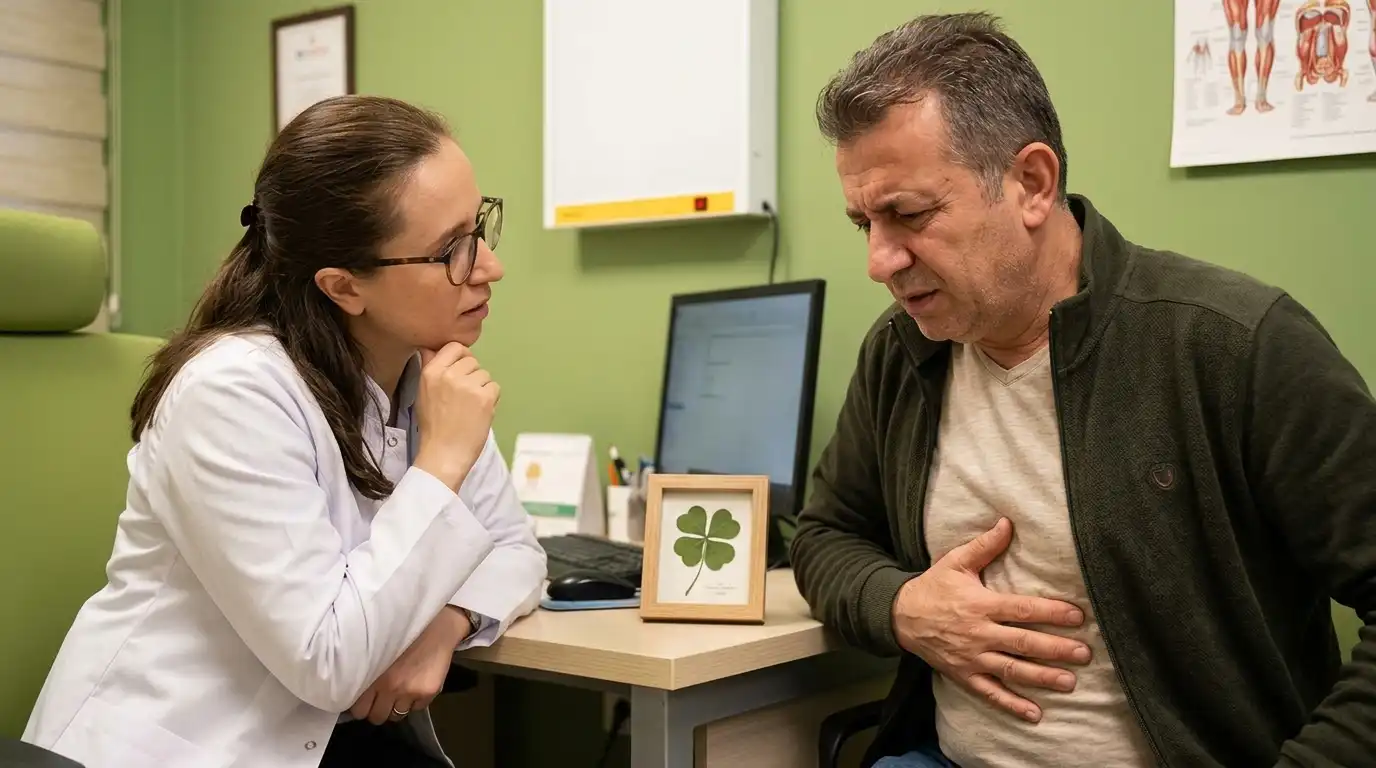
Why Cancer Diagnosis Requires Pathology
You may have heard a story about someone who had surgery thinking it was cancer, only to learn afterward that it was not. Stories like this can be confusing, and they sometimes lead people to question whether the surgery was necessary. But to understand why this happens, it helps to look at the full picture of how cancer is diagnosed.
The only definitive way to diagnose cancer is through histopathological examination, which means analyzing tissue under a microscope by a pathologist. This requires a sample of the suspicious area, which is obtained either through a biopsy or by surgically removing the entire lesion. Imaging scans and blood tests can suggest that cancer may be present, but they cannot confirm it.
A logical question follows: why not simply take a small tissue sample, confirm whether it is cancer, and then plan treatment accordingly? In many cases this works well, but in some situations it is not that simple.
Why Biopsy Is Not Always Feasible
There are several reasons why a biopsy may not be the straightforward solution it seems. Some tumors are located in difficult or dangerous areas where obtaining a sample would be risky. Others are positioned deep inside the body, and while imaging-guided biopsy techniques exist, there is always a chance of sampling the wrong area, especially if the lesion is small or irregularly shaped.
Tumors themselves are not always uniform. A single tumor can contain areas of scar tissue, dead tissue, inflammation, and living cancer cells all mixed together. If the biopsy needle happens to sample one of the non-cancerous areas, the result will come back negative even though cancer is present. This is called a false-negative result, and it is one of the main reasons that a negative biopsy does not always rule out cancer.
When Surgery Is the Safest Way to Be Certain
In situations where a biopsy cannot be performed safely or where the result may be unreliable, the safest option is often to remove the suspicious tissue entirely through surgery so that it can be examined in full. This approach eliminates the risk of sampling error and provides the pathologist with the complete picture.
If cancer is not found after such a surgery, that should be seen as a positive outcome, not as a failed procedure. The surgery served its purpose: to rule out a potentially life-threatening disease with certainty. When the stakes are as high as a missed cancer diagnosis, sometimes the most responsible medical decision is to operate on suspicion rather than wait for absolute proof.
Final Thought
Having surgery only to find out there was no cancer can feel emotionally confusing. But it is important to understand that in certain situations, surgery is the only reliable way to be certain. When it comes to cancer, missing a diagnosis can have life-threatening consequences. In these situations, the surgical decision is made not out of certainty but out of responsibility, and sometimes that is the most medically sound choice.
If you have been referred for surgery based on suspicious findings and have questions about the diagnostic process, contact our team for a second opinion or more information about our cancer surgery services.