
Weight loss injections have changed the way obesity is treated. At the same time, gastric sleeve surgery remains one of the most established bariatric surgery options for long-term weight management.
This has created one of the most common questions among people considering obesity treatment: Mounjaro or gastric sleeve, which is better for long-term weight loss?
There is no single answer for everyone. The right approach depends on factors such as BMI, existing health conditions, previous weight loss attempts, treatment expectations and overall medical history.
What Is Mounjaro?
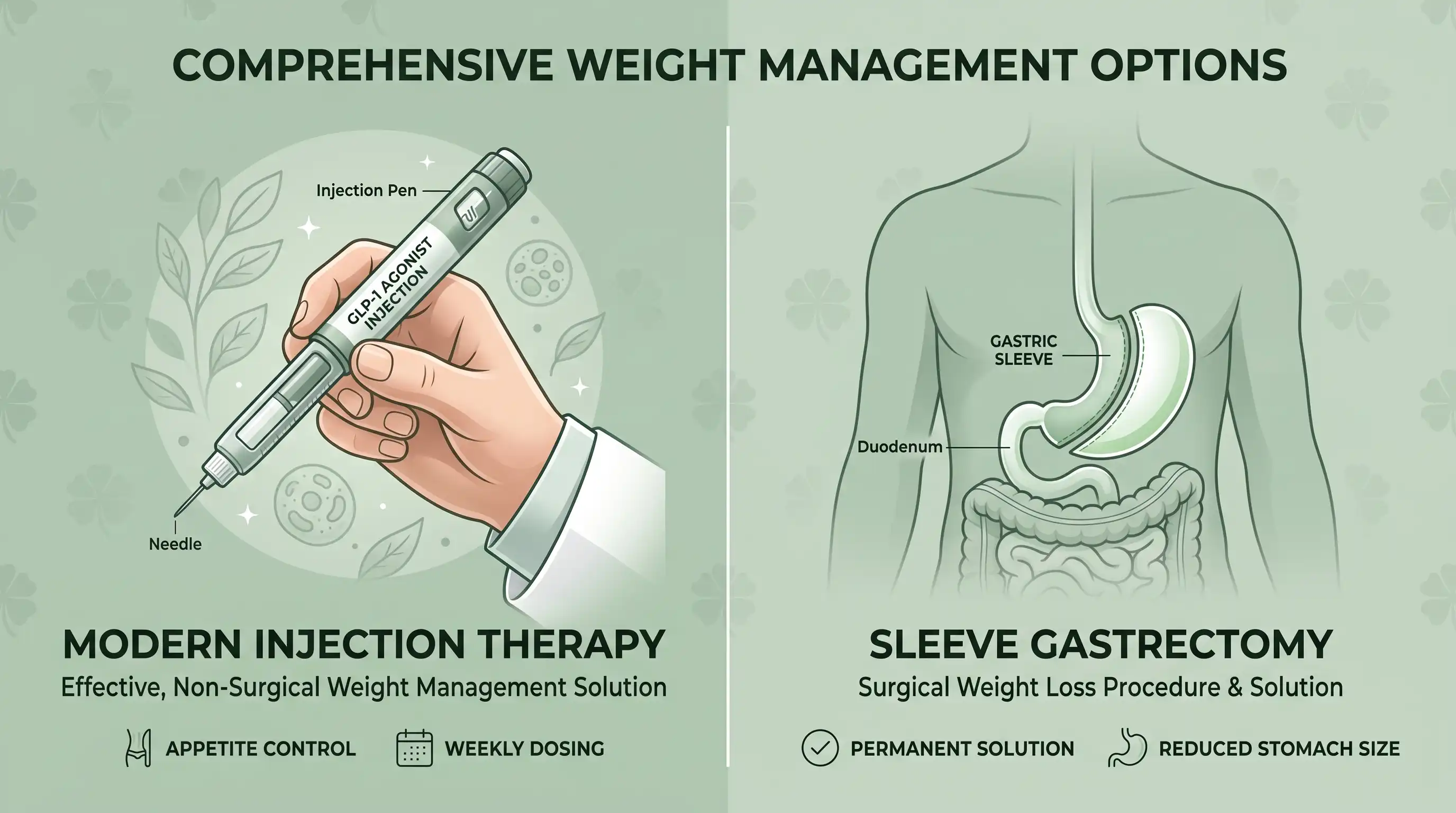
Mounjaro contains tirzepatide, a medication that acts on GIP and GLP-1 pathways involved in blood sugar regulation and appetite.
People frequently search for “Mounjaro for weight loss,” although approved brand indications differ between countries. In the United States, Mounjaro is approved for type 2 diabetes, while tirzepatide is approved for chronic weight management under the brand name Zepbound in eligible adults with obesity or overweight and a weight-related condition.
Tirzepatide can reduce appetite, help people feel full sooner and support significant weight loss when combined with appropriate nutrition and physical activity.
Clinical studies have demonstrated substantial weight reduction with tirzepatide in adults with obesity. However, obesity is a chronic condition, and medication may need to be continued for weight-loss maintenance. Research has shown that significant weight regain can occur after tirzepatide is discontinued.

What Is Gastric Sleeve Surgery?
Sleeve gastrectomy, commonly called gastric sleeve surgery, is a bariatric procedure in which a large portion of the stomach is removed, leaving a smaller sleeve-shaped stomach.
The procedure reduces the amount of food the stomach can hold and also influences physiological mechanisms involved in hunger and metabolism.
Unlike weight loss medication, gastric sleeve is a surgical intervention. It therefore involves anesthesia, a recovery period and long-term dietary and lifestyle changes.
Long-term research on bariatric surgery has shown that many patients maintain meaningful weight loss years after surgery. NIDDK data from one large study reported average weight loss of approximately 18.8% of starting body weight five years after sleeve gastrectomy (doi:10.1001/jama.2023.24945), although individual results vary considerably.
Mounjaro vs Gastric Sleeve: What Is the Main Difference?
The biggest difference is how the two treatments approach obesity.
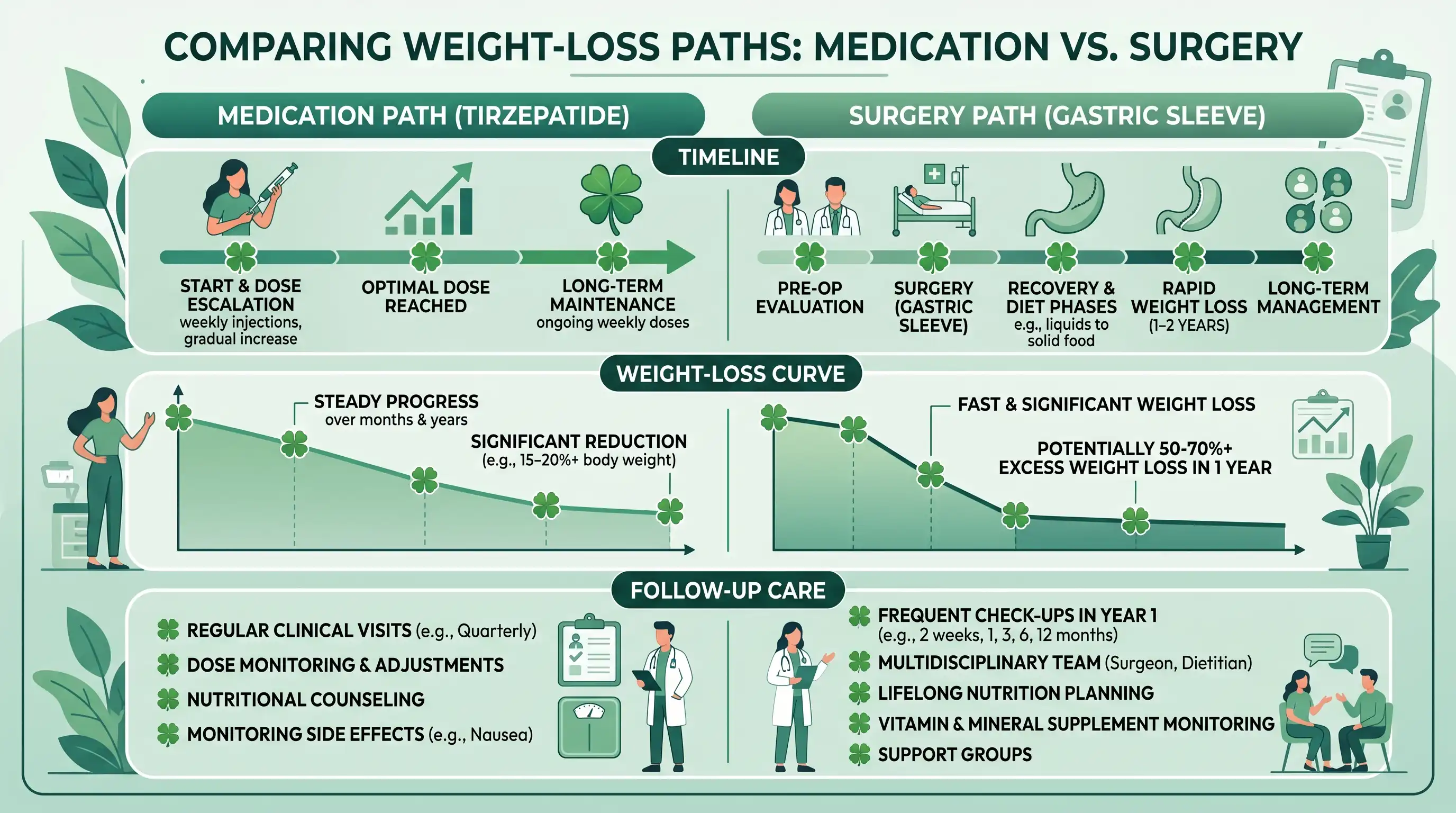
Tirzepatide is a medication-based treatment that can reduce appetite and support weight management while the treatment is being used. Gastric sleeve permanently changes the anatomy of the stomach and forms part of a long-term surgical approach to obesity.
Neither option should be considered an “easy” solution. Both require medical supervision, appropriate nutrition, lifestyle changes and long-term follow-up.
What Happens If You Stop Mounjaro?
This is an important question for anyone considering weight loss medication.
In the SURMOUNT-4 trial, patients who discontinued tirzepatide regained a substantial amount of weight, while participants who continued treatment maintained or increased their weight loss (doi:10.7326/M17-2786). More recent follow-up analysis has reinforced the importance of ongoing obesity management after medication withdrawal.
This does not mean that weight regain will happen to every patient in exactly the same way. It does show why patients should discuss the long-term treatment strategy, not simply the first few months of weight loss.

Which Option Is Better for You?
The answer depends on the individual. A person with severe obesity and obesity-related health conditions may require a very different approach from someone with a lower BMI who is considering medical weight management.
Previous treatments, diabetes, cardiovascular risk, eating habits, medication tolerance, surgical risk and personal preferences should all form part of the decision.
Rather than asking only “Which one makes you lose more weight?”, a better question may be:
“Which obesity treatment gives me the most appropriate long-term strategy for my health?”
A comprehensive evaluation with an experienced medical team is the best place to begin. BB Global Health coordinates international patients with experienced medical teams and licensed partner healthcare institutions in Istanbul for individual evaluation and treatment planning.

References
- U.S. Food and Drug Administration (FDA). FDA Approves New Medication for Chronic Weight Management. Information on tirzepatide (Zepbound), including its indication and eligibility criteria.
- U.S. Food and Drug Administration (FDA). Zepbound (tirzepatide) Prescribing Information. Current prescribing information, indications, dosing, and safety considerations.
- National Institute of Diabetes and Digestive and Kidney Diseases (NIDDK). Types of Weight-Loss Surgery. Overview of sleeve gastrectomy and other bariatric surgical procedures.
- National Institute of Diabetes and Digestive and Kidney Diseases (NIDDK). Weight Loss from Bariatric Surgery Compared to Nonsurgical Care for People with Severe Obesity. Long-term weight-loss outcomes following sleeve gastrectomy and gastric bypass.
- Aronne LJ, Sattar N, Horn DB, et al. Continued Treatment With Tirzepatide for Maintenance of Weight Reduction in Adults With Obesity: The SURMOUNT-4 Randomized Clinical Trial. JAMA. 2024;331(1):38–48. doi:10.1001/jama.2023.24945.
- Arterburn D, Wellman R, Emiliano A, et al.; PCORnet Bariatric Study Collaborative. Comparative Effectiveness and Safety of Bariatric Procedures for Weight Loss: A PCORnet Cohort Study. Ann Intern Med. 2018;169(11):741–750. doi:10.7326/M17-2786. PMID: 30383139; PMCID: PMC6652193.