Stomach Cancer Symptoms You Shouldn’t Ignore: When Indigestion Is More Than Indigestion
Almost everyone has had indigestion. Heartburn after a heavy meal, a bloated evening, a stomach that feels unsettled for a few days — these are among the most common complaints in primary care, and the overwhelming majority of them are not cancer.
That is exactly why stomach cancer is so often diagnosed late.
Gastric cancer rarely announces itself. In its earliest and most curable stages it produces symptoms indistinguishable from gastritis, reflux or a stubborn ulcer, and many people treat themselves with antacids for months before anyone looks inside the stomach.
According to the World Health Organization’s International Agency for Research on Cancer (IARC), stomach cancer accounted for an estimated 980,286 new cases and 641,554 deaths worldwide in 2024 — the fifth most commonly diagnosed cancer and the fifth leading cause of cancer death globally.[1]
What that global figure hides is how much the outcome depends on when the diagnosis is made. In US SEER data covering patients diagnosed between 2015 and 2021, five-year relative survival for stomach cancer was 77% when the disease was still confined to the stomach, 37% once it had spread to nearby structures or lymph nodes, and 8% once it had spread to distant organs. Across all stages combined it was 38% — largely because most cases in Western countries are not found until the disease is already advanced.[2]
The difference between those numbers is rarely the surgery. It is the timing.
The symptoms people dismiss
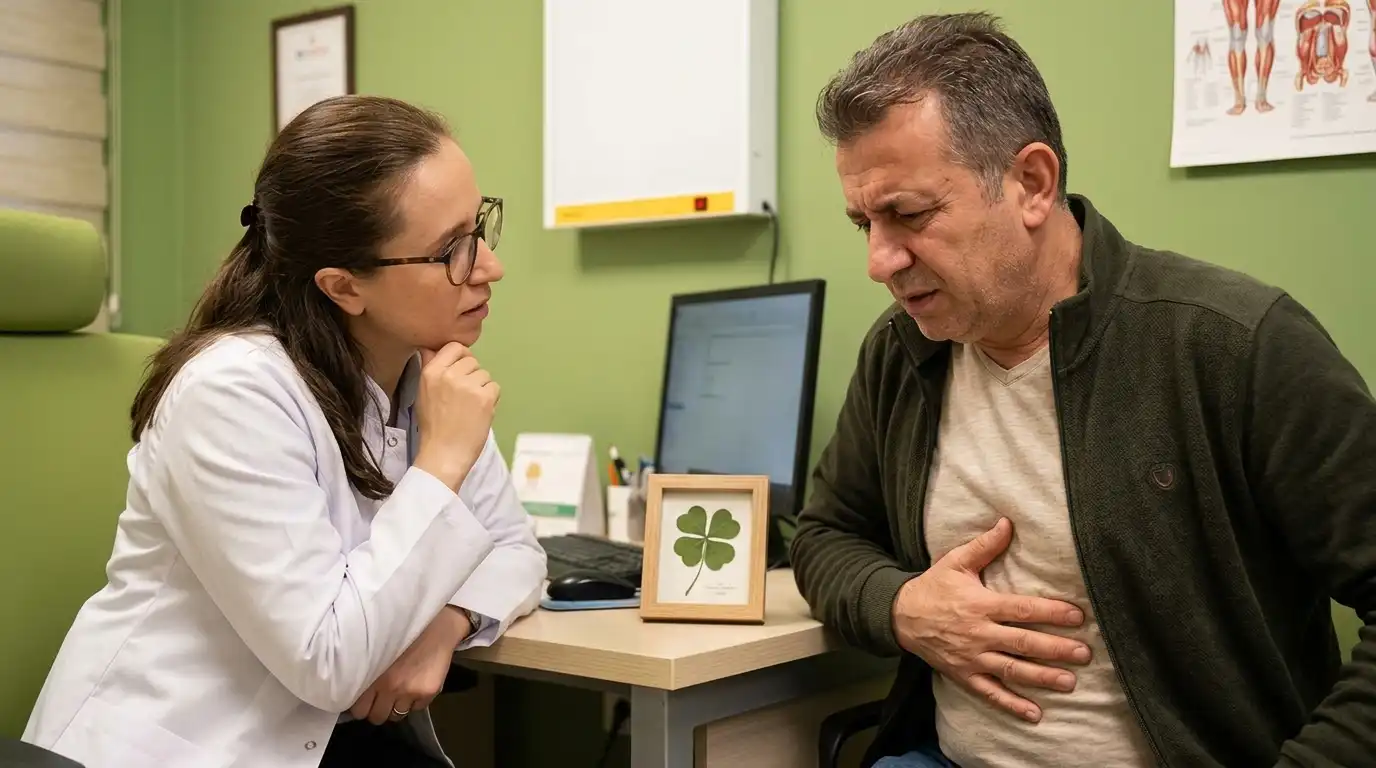
The signs below are far more often caused by benign conditions than by cancer. What makes them worth attention is persistence — symptoms that continue for weeks, that keep returning after treatment, or that are new in an older adult.
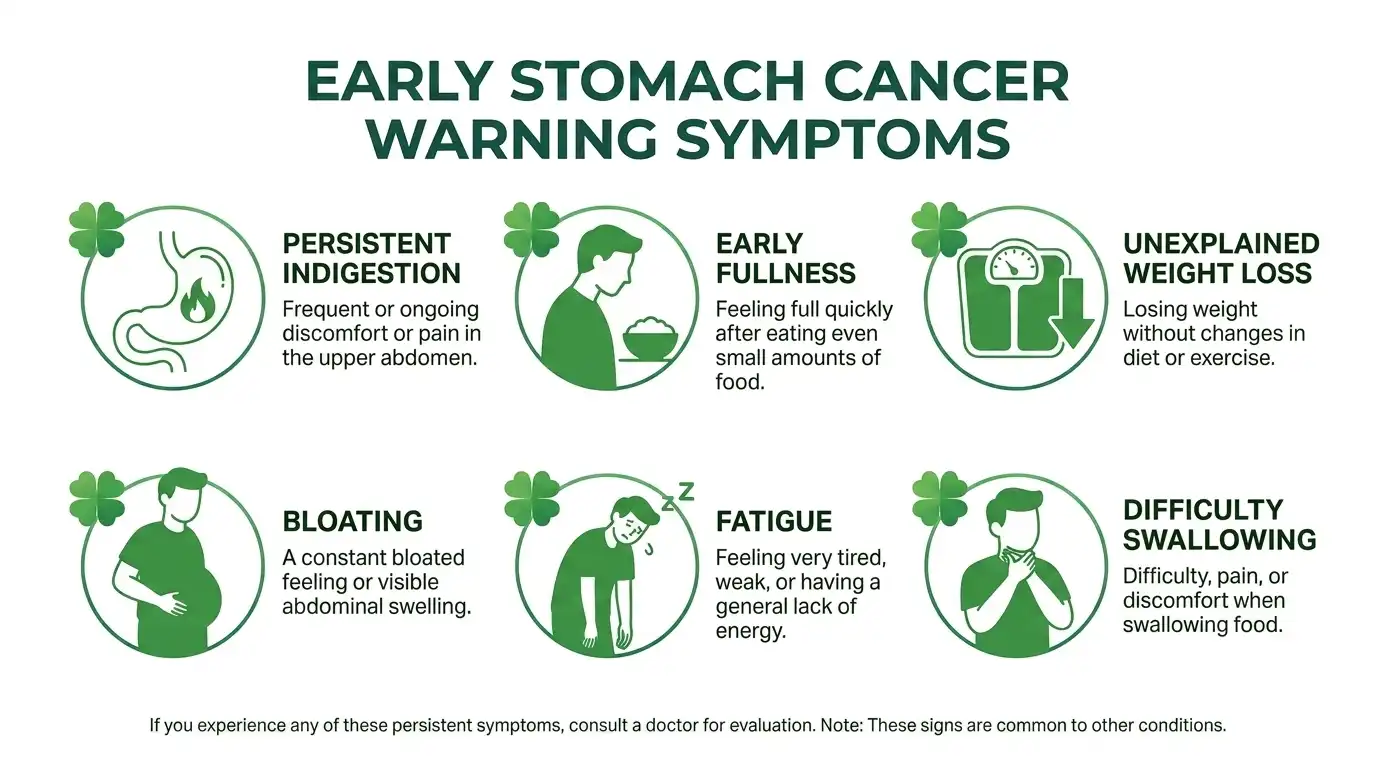
Indigestion that doesn’t settle. Dyspepsia that returns as soon as you stop taking a proton pump inhibitor, or that never fully responds to it, deserves investigation rather than a repeat prescription. UK NICE guidance lists treatment-resistant dyspepsia in people aged 50 and over as an indication for direct-access upper GI endoscopy.[3]
Feeling full after only a few bites. Early satiety is one of the most specific early signs and one of the most commonly overlooked. A tumour, or stiffening of the stomach wall, reduces how much the stomach can expand — and people adapt without noticing: smaller portions, skipped meals, “I just don’t have much appetite lately.”
Unexplained weight loss. Weight loss without a change in diet or activity is a recognised red flag. NICE recommends urgent endoscopy (within two weeks) for people aged 55 and over with weight loss combined with upper abdominal pain, reflux or dyspepsia.[3]
Persistent bloating or upper abdominal discomfort. Typically felt just below the breastbone, often described as pressure or gnawing rather than sharp pain.
Fatigue and iron-deficiency anaemia. Slow, invisible bleeding from a gastric tumour depletes iron long before any blood becomes visible. British Society of Gastroenterology guidelines make this explicit: in men and postmenopausal women with newly diagnosed iron-deficiency anaemia, gastroscopy and colonoscopy “should generally be the first-line GI investigations” — a strong recommendation, even when there are no digestive symptoms at all.[4]
Nausea or vomiting that keeps recurring, particularly after eating.
Difficulty swallowing (dysphagia). Food that seems to stick, or pressure on swallowing, can indicate a tumour at the junction between the oesophagus and the stomach. NICE recommends urgent endoscopy for dysphagia at any age.[3]
Signs that need urgent assessment
Some symptoms should not wait for a routine appointment. Seek medical care promptly if you experience:
- Vomiting blood, or material that looks like coffee grounds
- Black, tarry stools (melena) — digested blood from the upper digestive tract
- New difficulty swallowing, particularly if it is worsening
- Rapid unintentional weight loss combined with abdominal pain
- A palpable lump or persistent swelling in the upper abdomen
These do not mean cancer is certain. They mean the cause needs to be identified quickly.
Who carries higher risk
Stomach cancer is not random, and knowing your risk profile changes how seriously an ambiguous symptom should be taken.
Helicobacter pylori infection is the single most important modifiable risk factor. IARC classifies H. pylori as a Group 1 carcinogen — its highest certainty category, the same as tobacco.[5] IARC’s own burden estimates attribute 89% of non-cardia stomach cancers worldwide to the infection.[6] It is common, usually acquired in childhood, frequently symptomless — and both testable and, in most cases, curable with a short course of antibiotics.
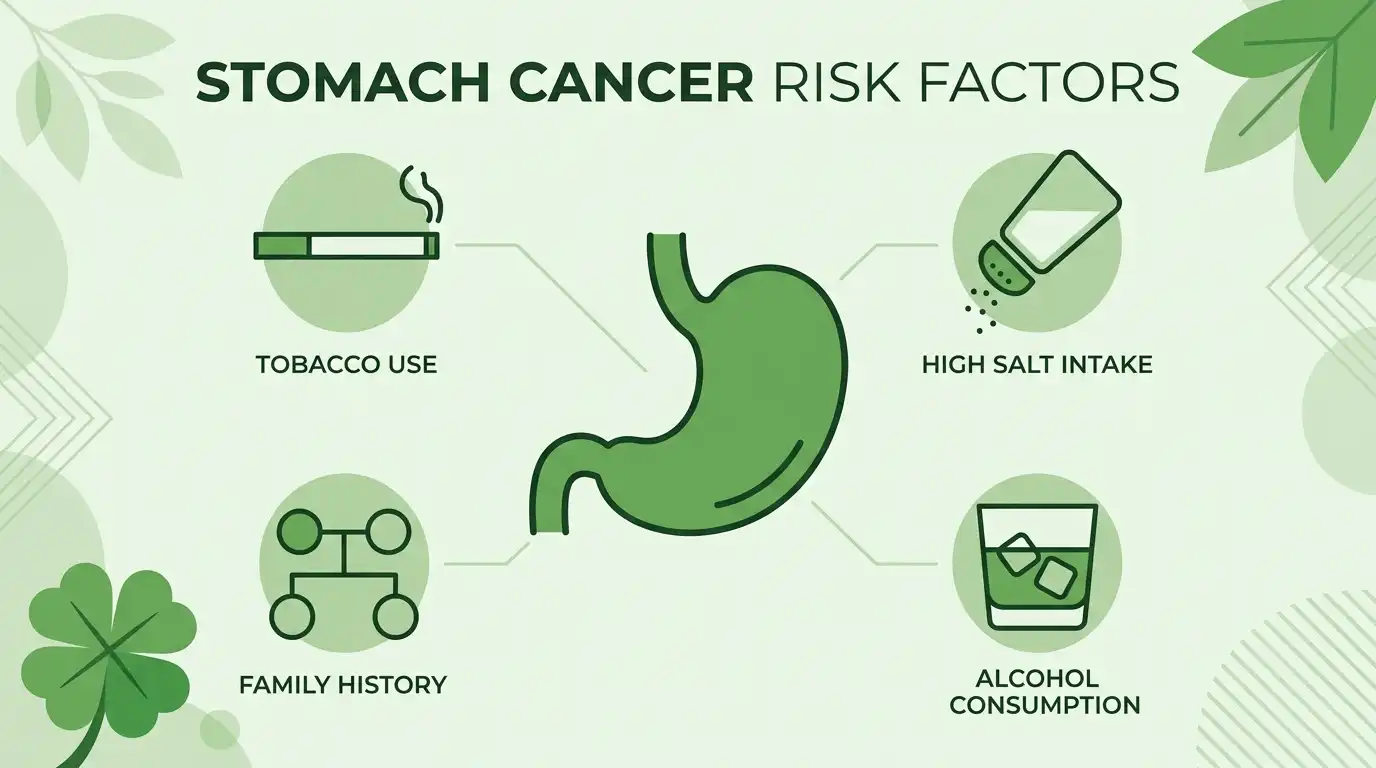
Smoking. A meta-analysis of cohort studies found gastric cancer risk in current smokers was 62% higher in men (RR 1.62, 95% CI 1.50–1.75) and 20% higher in women (RR 1.20, 95% CI 1.01–1.43) compared with never-smokers.[7] World Cancer Research Fund estimates around 11% of stomach cancer cases worldwide are caused by tobacco.[8]
Diet, alcohol and body weight. WCRF identifies salt-preserved foods, drinking three or more alcoholic drinks a day, and living with overweight or obesity as factors that increase stomach cancer risk.[8]
Other established risk factors:
- A first-degree relative with stomach cancer
- Previously diagnosed atrophic gastritis, intestinal metaplasia or gastric polyps
- Previous gastric surgery
- Ancestry from high-incidence regions — Eastern Asia has by far the highest rates globally, followed by Eastern Europe and South America[1]
- Rare inherited syndromes, principally hereditary diffuse gastric cancer (HDGC) caused by germline CDH1 variants. In families meeting stringent criteria, cumulative gastric cancer risk by age 80 has been estimated at 70% in men and 56% in women — which is why carriers are managed with genetic counselling and consideration of prophylactic gastrectomy[9]
Age is not a safeguard. Gastrointestinal cancers in adults under 50 have been rising globally, and stomach cancer is among them.[10] A young patient with persistent, unexplained upper GI symptoms still warrants investigation.
What investigation actually involves
If symptoms persist, the definitive test is straightforward.
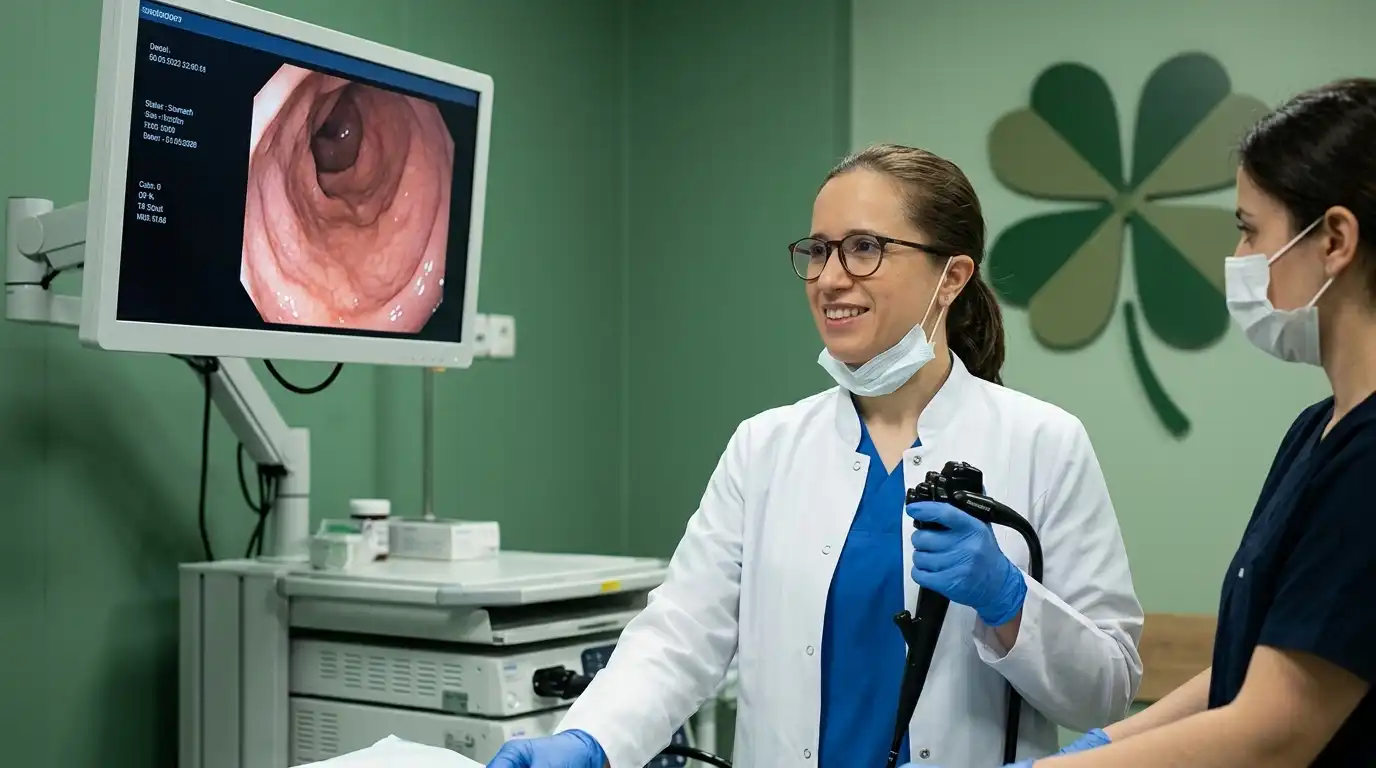
Upper endoscopy (gastroscopy) allows a gastroenterologist to view the stomach lining directly and biopsy anything suspicious. It takes around 10–15 minutes, is usually performed under sedation, and is the only way to confirm or exclude a gastric tumour. High-definition imaging can detect lesions only millimetres across — lesions that in selected cases can be removed endoscopically, without removing any part of the stomach.[11] H. pylori testing is usually performed at the same time.
If cancer is confirmed, staging determines treatment. European guidelines recommend CT of the chest, abdomen and pelvis, with endoscopic ultrasound (EUS) to assess tumour depth and PET-CT in selected cases; all cases should be discussed by a multidisciplinary tumour board.[11] Accurate staging matters as much as the operation — it determines whether chemotherapy comes first, whether endoscopic resection is possible, and how extensive the lymph node dissection must be.

What you can do now
WHO estimates that approximately 38% of cancers can currently be prevented by avoiding known risk factors.[12] For stomach cancer specifically, the most effective steps are well established:
- Get tested for H. pylori if you have persistent dyspepsia or a family history of stomach cancer — and confirm eradication after treatment
- Stop smoking
- Reduce salt-preserved foods; increase fresh fruit and vegetables
- Limit alcohol
- Don’t normalise persistent symptoms. Weeks of unexplained upper digestive symptoms are a reason to be examined, not a reason to buy stronger antacids.
When a second opinion is worth seeking
A gastric cancer diagnosis is not a single decision but a sequence of them — and where the surgery happens measurably affects the outcome. A systematic review and meta-analysis of gastrectomy volume found that high-volume hospitals were associated with lower short-term mortality (OR 0.66, 95% CI 0.58–0.75), better overall survival (HR 0.82, 95% CI 0.75–0.90) and more than double the odds of an adequate lymphadenectomy (OR 2.14, 95% CI 1.76–2.59).[13] That last figure matters most: the completeness of lymph node dissection is among the strongest surgical determinants of long-term outcome.

At BB Global Health, our surgical oncology partners review endoscopy reports, pathology and imaging remotely before any travel is arranged, and cases are presented to a multidisciplinary tumour board at JCI-accredited hospitals in Istanbul. If you or a family member has recently been diagnosed, you can share your reports with our medical coordination team for an independent surgical opinion.
Early stomach cancer is among the most treatable cancers there is. The obstacle is almost never the treatment — it is the months spent assuming it was only indigestion.
References
- World Health Organization / International Agency for Research on Cancer. Stomach — Global Cancer Observatory fact sheet (GLOBOCAN 2024). https://gco.iarc.who.int/media/globocan/factsheets/cancers/7-stomach-fact-sheet.pdf
- American Cancer Society. Survival Rates for Stomach Cancer (SEER 5-year relative survival, cases diagnosed 2015–2021). https://www.cancer.org/cancer/types/stomach-cancer/detection-diagnosis-staging/survival-rates.html
- National Institute for Health and Care Excellence. Suspected cancer: recognition and referral (NG12) — oesophageal and stomach cancer referral criteria. https://www.nice.org.uk/guidance/ng12
- Snook J, Bhala N, Beales ILP, et al. British Society of Gastroenterology guidelines for the management of iron deficiency anaemia in adults. Gut. 2021;70:2030–2051. doi:10.1136/gutjnl-2021-325210
- IARC Monographs on the Identification of Carcinogenic Hazards to Humans, Volume 100B: Biological Agents — Helicobacter pylori classified as a Group 1 (carcinogenic to humans) agent. https://publications.iarc.who.int/
- International Agency for Research on Cancer. Global burden of gastric cancer attributable to Helicobacter pylori (89.0% of non-cardia gastric cancer). https://www.iarc.who.int/reference/global-burden-of-gastric-cancer-attributable-to-helicobacter-pylori/ — original analysis: Plummer M, Franceschi S, Vignat J, Forman D, de Martel C. Int J Cancer. 2015;136(2):487–490. doi:10.1002/ijc.28999
- Ladeiras-Lopes R, Pereira AK, Nogueira A, et al. Smoking and gastric cancer: systematic review and meta-analysis of cohort studies. Cancer Causes Control. 2008;19(7):689–701. doi:10.1007/s10552-008-9132-y
- World Cancer Research Fund International / AICR. Stomach cancer — risk factors and prevention. https://www.wcrf.org/preventing-cancer/cancer-types/stomach-cancer/
- Blair VR, McLeod M, Carneiro F, et al. Hereditary diffuse gastric cancer: updated clinical practice guidelines. Lancet Oncol. 2020;21(8):e386–e397.
- Early-Onset Gastrointestinal Cancers: A Review. JAMA. 2025. doi:10.1001/jama.2025.10218 (PMID: 40674064)
- Lordick F, Carneiro F, Cascinu S, et al. Gastric cancer: ESMO Clinical Practice Guideline for diagnosis, treatment and follow-up. Annals of Oncology. 2022. PMID: 35914639. https://www.annalsofoncology.org/article/S0923-7534(22)01851-8/fulltext
- World Health Organization. Cancer — fact sheet. https://www.who.int/news-room/fact-sheets/detail/cancer
- Ji J, Shi L, Ying X, et al. Associations of Annual Hospital and Surgeon Volume with Patient Outcomes After Gastrectomy: A Systematic Review and Meta-analysis. Ann Surg Oncol. 2022;29:8276–8297. doi:10.1245/s10434-022-12515-y
This article is for general information and does not replace individual medical advice. If you have persistent digestive symptoms, consult a qualified physician. All epidemiological and clinical figures cited are referenced above; statistics are current as of the publication date and are reviewed annually.