Insulin Resistance and Obesity: Why Weight Loss Is Difficult
Many people struggling with obesity hear the same advice repeatedly: eat less, move more, and stay disciplined. While lifestyle habits are important, weight loss is not always that simple.
For many patients, the difficulty is not only about food choices or motivation. It may be connected to how the body processes insulin, stores energy, regulates hunger, and responds to weight loss attempts.
One of the key factors behind this struggle is insulin resistance.

What Is Insulin Resistance?
Insulin is a hormone produced by the pancreas. Its main role is to help move sugar from the blood into the cells, where it can be used for energy.
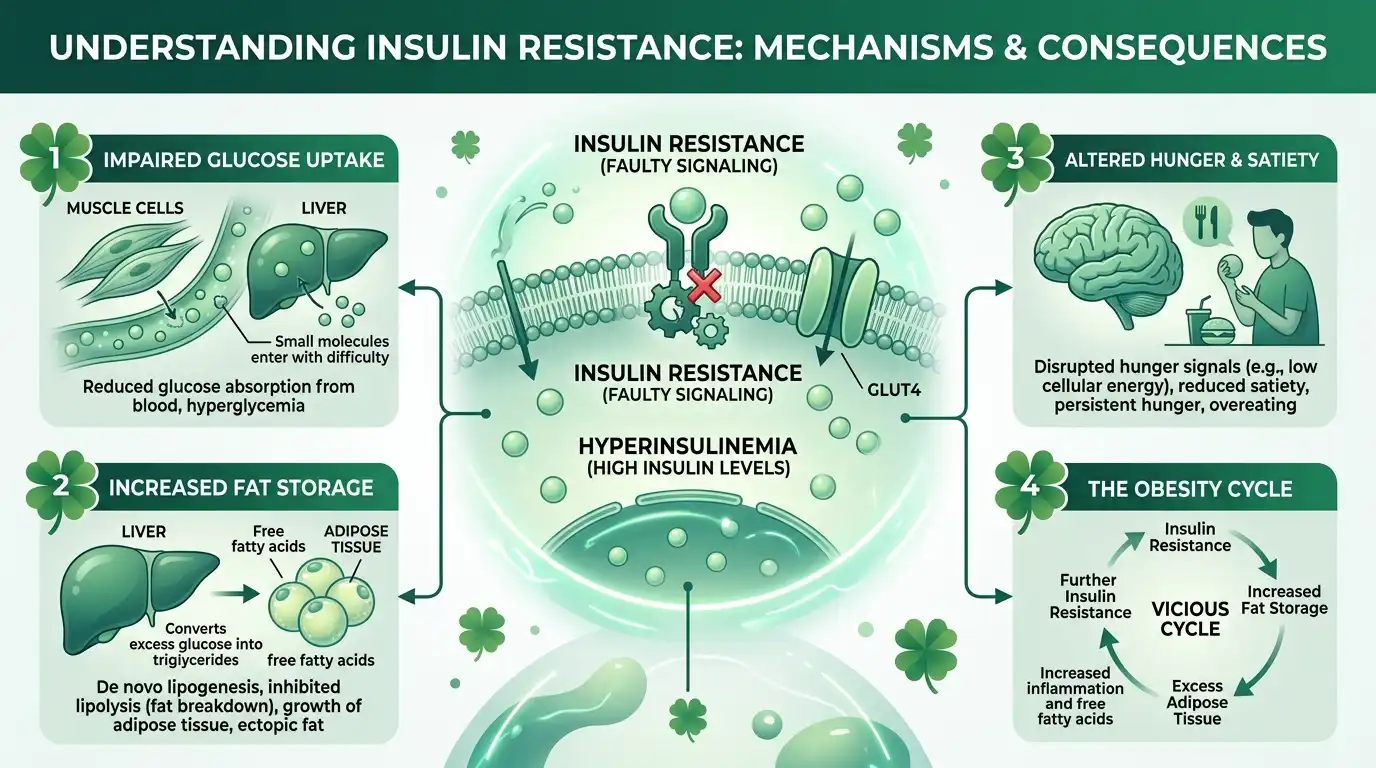
When the body becomes resistant to insulin, the cells do not respond to insulin as effectively as they should. As a result, the body needs to produce more insulin to keep blood sugar under control. Over time, this can contribute to higher blood sugar levels, weight gain, prediabetes, and type 2 diabetes risk.
In simple terms, insulin resistance means the body is working harder than normal to manage blood sugar and energy storage.
How Is Insulin Resistance Connected to Obesity?
Obesity and insulin resistance are closely linked, although not every person with obesity has insulin resistance, and not every person with insulin resistance has obesity. The CDC notes that overweight and obesity are risk factors, but insulin resistance cannot be diagnosed simply by looking at someone’s body size.
Excess body fat, especially around the abdomen, can affect how the body responds to insulin. When insulin levels remain high, the body may store more energy as fat and make it harder to access stored fat for fuel.
This can create a frustrating cycle: weight gain may worsen insulin resistance, and insulin resistance may make weight loss more difficult.

Why Can Insulin Resistance Make Weight Loss Harder?
When insulin resistance is present, the body may struggle to use glucose efficiently. This can lead to energy fluctuations, increased hunger, cravings, and difficulty maintaining weight loss.
Some patients may feel like they are doing everything right but still not seeing results. This does not always mean they are “failing.” It may mean that their metabolism is under pressure and needs medical evaluation.
This is why obesity treatment should not focus only on the number on the scale. Blood sugar, insulin response, metabolic health, sleep, stress, appetite regulation, and obesity-related conditions all matter.

Does Everyone With Obesity Have Insulin Resistance?
No. Not everyone with obesity has insulin resistance.
However, insulin resistance is common in patients with obesity and can increase the risk of several metabolic conditions. Other risk factors include high blood sugar, high triglycerides, low HDL cholesterol, family history of type 2 diabetes, and physical inactivity.
This is why a proper medical evaluation is important. Two patients may have the same weight or BMI, but very different metabolic profiles.
Common Signs That May Suggest Insulin Resistance
Insulin resistance may not always cause clear symptoms in the beginning. Some patients only discover it through blood tests.
However, it may be associated with signs such as difficulty losing weight, increased hunger or cravings, fatigue after meals, abdominal weight gain, high fasting blood sugar, or a diagnosis of prediabetes. These signs do not confirm insulin resistance on their own, but they may indicate the need for medical assessment.

Why Diets Often Fail in Insulin Resistance
Many diets produce short-term results by reducing calories. But if the underlying metabolic problem is not addressed, the body may respond by increasing hunger, reducing energy levels, and making weight regain more likely.
This is not just about discipline. It is about biology.
For patients with insulin resistance, sustainable weight loss may require a more structured approach that includes nutrition planning, physical activity, medical monitoring, and sometimes medication or bariatric surgery, depending on the patient’s health profile.

How Bariatric Surgery May Help
For selected patients, bariatric surgery can support significant weight loss and may also improve metabolic conditions related to obesity.
Procedures such as gastric sleeve or gastric bypass may affect appetite, hormones, blood sugar control, and long-term weight management. This is why bariatric surgery is often described as metabolic surgery, not just weight loss surgery.
However, surgery is not suitable for everyone. The decision should always be based on a full medical evaluation, including BMI, blood tests, medical history, lifestyle factors, and obesity-related risks.
Why Proper Evaluation Matters
Insulin resistance cannot be fully understood through weight alone. A proper evaluation may include blood sugar levels, fasting insulin, HbA1c, lipid profile, liver health, medical history, eating patterns, sleep quality, stress, and physical activity level. This helps doctors understand what is actually making weight loss difficult and which treatment option may be most appropriate.

At BB Global Health, the focus is not on offering the same solution to every patient. The goal is to understand the full picture and create a personalized treatment plan based on each patient’s health needs.